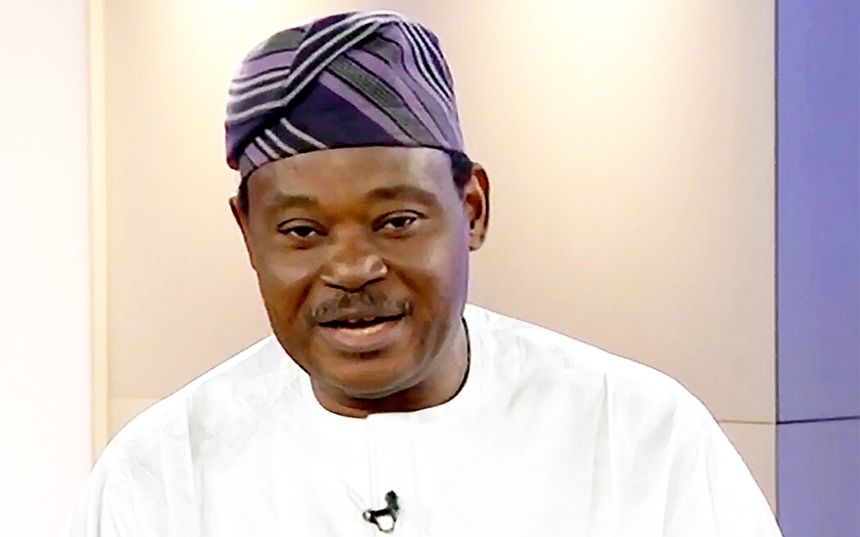
Jimoh Ibrahim Explains Why Shettima Did Not Sit Near Trump at UNGA
Nigeria’s Permanent Representative to the United Nations, Jimoh Ibrahim, has explained the circumstances surrounding the seating arrangement involving Vice President Kashim Shettima and United States President Donald Trump at the 81st United Nations General Assembly.
Ibrahim had earlier indicated that Nigeria would secure a prominent position close to Trump during the General Assembly. However, Shettima, who represented President Bola Tinubu at the event, was not seated alongside the US president.
Speaking on Channels Television’s Politics Today on Tuesday, Ibrahim said Nigeria nonetheless secured the sixth position in the front row of the General Assembly chamber, describing the arrangement as a notable diplomatic achievement.
Follow PenTalk News
Get breaking news, important updates and the latest stories directly on your phone.
He explained that Trump did not remain in the chamber after delivering his address, meaning there was no opportunity for the US president to occupy a designated seat near the Nigerian delegation.
“You have to thank me and commend my effort. I said Nigeria will be in the front seat, was Nigeria not in the front seat?” Ibrahim said.
He added that the expectation that Nigeria would sit beside Trump was based on a misunderstanding of the US president’s movements at the event.
According to Ibrahim, Trump entered the chamber, delivered his address from the podium and subsequently left without taking a seat in the hall.
“He didn’t sit for a second, he just came in to the podium, delivered a guest speech and left from there,” he said.
Ibrahim further argued that if Trump had remained in the chamber, his position would have been behind the Nigerian delegation rather than in front of it.
“In fact, he would have been sitting far behind Nigeria. So, what are you talking about? I delivered on the fact that Nigeria will sit in the front row, number six,” the envoy said.
He also stressed the significance of Nigeria occupying the sixth position in the front row among the 193 member states of the United Nations.
“Do you think it is easy for a country to sit at number six in the front row?” Ibrahim asked, noting that Nigeria’s position reflected its place in the diplomatic seating arrangement.
Ibrahim Defends Tinubu’s Absence
The Nigerian envoy also defended President Tinubu’s decision not to attend the General Assembly in New York, saying he would not have recommended the trip under the circumstances.
Ibrahim said a significant number of world leaders scheduled to address the General Assembly were represented by vice presidents, foreign ministers or other senior officials.
He questioned the need for Tinubu to leave other matters requiring his attention in Nigeria for an approximately 15-minute address at the UN when several countries had similarly delegated representation to senior government officials.
The envoy also pointed to the absence of leaders from countries including South Africa, China and Russia, arguing that Nigeria was adequately represented by Shettima.
He maintained that Tinubu would address the United Nations General Assembly at an appropriate time and insisted that the President’s absence did not diminish Nigeria’s diplomatic position.
Opposition Questions Tinubu’s Absence
Ibrahim’s comments came amid renewed public debate over Tinubu’s prolonged stay in Europe and his decision not to attend the UN General Assembly.
Former Vice President and African Democratic Congress presidential candidate Atiku Abubakar, alongside other opposition figures, had questioned the President’s extended absence from Nigeria and raised constitutional issues relating to Section 145.
Atiku specifically questioned whether Tinubu had transmitted a written declaration to the leadership of the National Assembly transferring presidential functions to Vice President Shettima during his absence.
Ibrahim rejected the concerns, insisting that Tinubu had not violated the Constitution.
“The president hasn’t committed any offence. Did he breach any provision of the Constitution?” he asked.
He further distinguished between working leave and an absolute leave, arguing that the President could continue to discharge his responsibilities while away.
“Human beings are not machines,” Ibrahim said.