After more than a decade of Narendra Modi‘s Bharatiya Janata Party (BJP) dominating Indian politics, a student-led protest movement has achieved what many believed was impossible: the resignation of a Union Cabinet minister.
Education Minister Dharmendra Pradhan stepped down following weeks of nationwide demonstrations demanding accountability over the alleged leak of question papers for the National Eligibility cum Entrance Test (NEET) held on May 3.
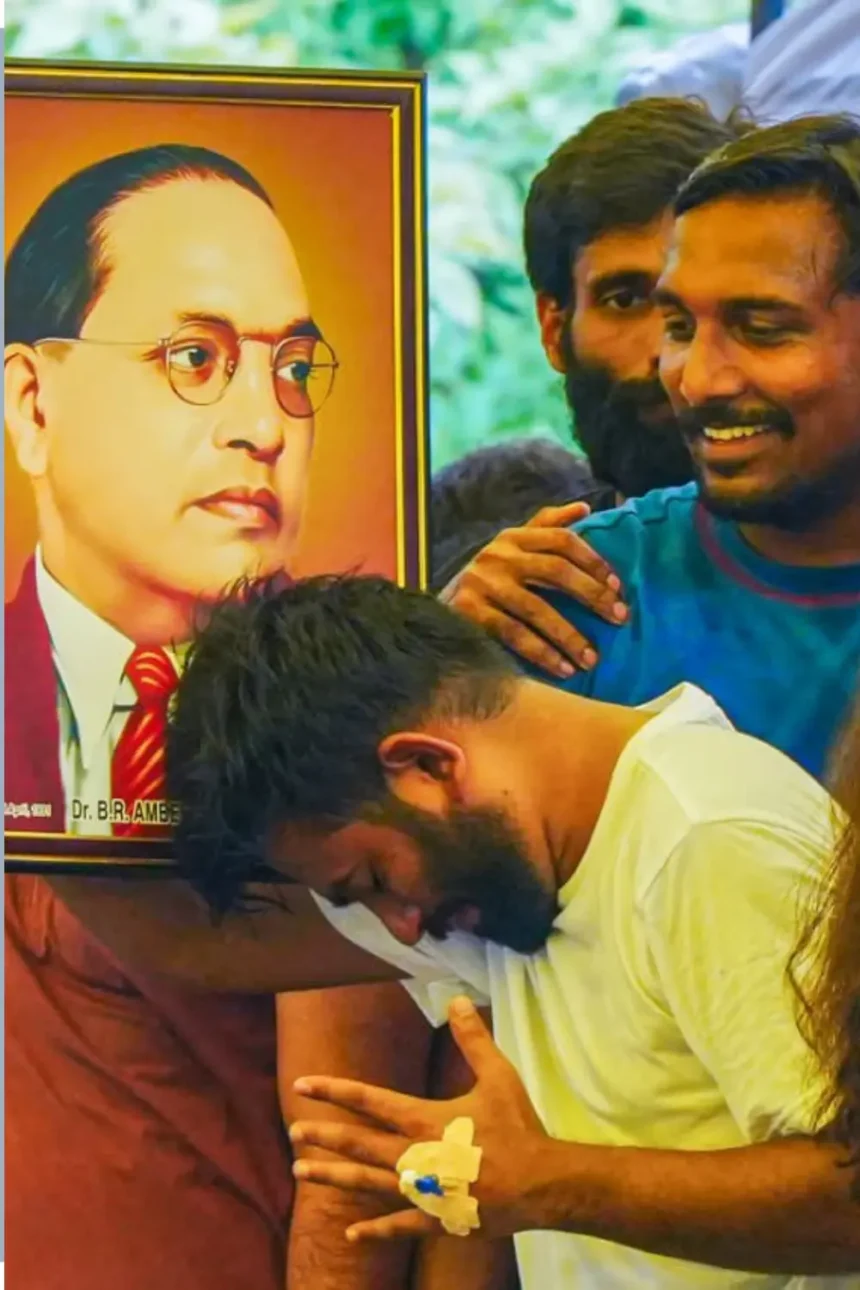
His resignation came 36 days after the Cockroach Janata Party (CJP), a youth-driven protest movement, began an indefinite sit-in at New Delhi’s Jantar Mantar. Protesters consistently demanded that those responsible for the examination scandal be held accountable.
The CJP began as an online satirical campaign launched by Abhijeet Dipke in May 2026 after India’s chief justice made remarks comparing unemployed young people to cockroaches. The campaign quickly gained traction, attracting more than two million supporters online before evolving into a nationwide protest movement led largely by Generation Z students.
What started as digital activism soon spilled onto the streets on June 6, with thousands of students joining demonstrations across the country. Few observers expected the movement to pressure the Modi administration into making such a significant concession.
Since taking office in 2014, Modi’s government has maintained a firm grip on power, winning three consecutive elections and earning a reputation for dealing harshly with critics and opposition figures. This record created a widespread perception that the administration was politically untouchable.
Pradhan’s resignation, however, has been viewed by many as a rare sign that sustained public pressure can still influence government decisions.
Following the announcement, the CJP celebrated the development on X, formerly Twitter, posting the message: “Democracy Wins.”
A 20-year-old student protester from Kolkata expressed excitement over the outcome, saying the movement had focused on a single demand, accountability, and believed it had finally been achieved.
The protests have also pushed the issue of political accountability back into India’s national conversation. Critics argue that ministers in recent years have rarely accepted responsibility for controversies under the current administration.
During the previous Congress-led United Progressive Alliance (UPA) government, cabinet ministers resigned on several occasions following pressure from opposition parties. By contrast, the BJP has generally resisted calls for resignations, arguing that ministers should not be forced out over every controversy.
Before Pradhan’s departure, the only cabinet-level resignation during Modi’s tenure had been that of junior foreign minister M.J. Akbar in 2018 after multiple allegations of sexual harassment.
For many protesters, the NEET controversy represented more than an examination leak. Demonstrators repeatedly highlighted reports that 21 students died by suicide following the scandal, insisting that officials should be held responsible.
Observers say the movement also reflected the growing political influence of India’s Generation Z. Many analysts describe younger voters as less willing to accept traditional authority and more prepared to challenge political leaders openly through both street protests and social media campaigns.
Prime Minister Modi’s suggestion that ministers become more active on Instagram drew criticism from campaigners, who argued that stronger action, not improved online communication, was needed to address concerns about examination integrity.
The protests also targeted Modi’s carefully cultivated public image. Over the years, the Prime Minister has projected himself as a decisive and powerful leader. Demonstrators challenged that narrative through memes, slogans, songs and social media content that mocked the government’s messaging.
Although the protesters officially demanded Pradhan’s resignation, much of their criticism focused directly on Modi and his leadership. Many political observers believe the mounting pressure on the Prime Minister’s image contributed to the government’s eventual decision.
The demonstrations also highlighted how social media has become a powerful political tool. While Modi was among India’s earliest politicians to effectively harness digital platforms during his rise to power, younger activists have now used those same platforms to organise protests, share information and challenge the government’s narrative.
Another notable outcome of the movement has been growing scepticism toward sections of India’s mainstream media. Protesters accused several television channels of portraying demonstrations unfairly while overlooking allegations of excessive force by security agencies.
When authorities cracked down on demonstrators on July 20, pro-government broadcasters largely blamed protesters for the violence. Independent journalists and videos shared on social media, however, showed injured students and alleged heavy-handed policing, prompting sympathy from opposition leaders, public figures and sections of the wider public.
Analysts note that communication strategies previously used during the anti-CAA protests and the farmers’ movement appeared less effective against this digitally connected generation, whose rapid sharing of real-time videos and online content challenged official narratives.
With young voters making up nearly one-third of India’s electorate, the protests have underscored growing frustration over education, employment and governance. Many believe these issues will remain central to India’s political landscape in the years ahead.
Source: The Diplomat