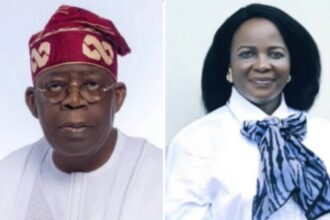
The Buhari Boko Haram mediator claim has resurfaced following remarks by former President Goodluck Jonathan, sparking political debate and renewed controversy. Jonathan alleged that insurgents once nominated Muhammadu Buhari to negotiate peace talks with the Nigerian government, a claim strongly rejected by Buhari’s former spokesman, Garba Shehu.
On Friday, Shehu released a statement titled “Boko Haram did not nominate Buhari as their mediator” to dismiss Jonathan’s comments. The rebuttal followed Jonathan’s speech at the launch of Scars: Nigeria’s Journey and the Boko Haram Conundrum, a book written by former Chief of Defence Staff, Gen. Lucky Irabor (retd.).
Jonathan’s Remark on the Buhari Boko Haram Mediator Claim
Jonathan had said that while he was in office, a committee reported that Boko Haram insurgents once nominated Buhari to lead peace negotiations with the government.
Follow PenTalk News
Get breaking news, important updates and the latest stories directly on your phone.
According to him, “One of the committees we set up then said Boko Haram nominated Buhari to represent them in talks with the government. I thought that if Buhari later became president, it could be an easier path to peace. But even after he took over, the crisis persisted.”
Shehu’s Rebuttal to Jonathan’s Statement
Garba Shehu, Buhari’s former Senior Special Assistant on Media and Publicity, described the Buhari Boko Haram mediator claim as “false and politically motivated.” He argued that Jonathan was attempting to rewrite history ahead of a possible 2027 presidential bid.
Shehu noted that neither Muhammed Yusuf nor Abubakar Shekau, both former leaders of Boko Haram, ever nominated Buhari for such a role. In fact, Shehu stressed that Shekau regularly denounced Buhari and even plotted against him. He recalled that Buhari narrowly escaped a 2014 Boko Haram bomb attack in Kaduna, which left some of his aides injured.
The 2012 Press Conference and Boko Haram Faction
Shehu clarified that the controversy stemmed from a 2012 press conference in Maiduguri led by a faction commander, Abu Mohammed Ibn Abdulaziz, who named Buhari and other northern leaders as possible mediators.
However, that faction was immediately disowned by Boko Haram’s main leadership under Shekau, who declared Abdulaziz had “no mandate” to speak for the sect. At the time, Buhari himself denied knowledge of the matter. His party official, Buba Galadima, confirmed: “As of 10pm yesterday when I spoke with him, Buhari said he had not even heard about it. Since nobody has contacted him personally, he will not speak to the press.”
Political Flashpoint Before the 2015 Elections
The Buhari Boko Haram mediator claim also became a political flashpoint in the run-up to the 2015 general elections. The then-opposition Congress for Progressive Change (CPC) accused Jonathan’s ruling PDP of exploiting the rumour for political gain.
Rotimi Fashekun, the late CPC publicity secretary, firmly stated that Buhari “has never been connected, directly or indirectly, with any insurgency against the Nigerian state.” He described Buhari as a “patriot who continues to draw support across Nigeria’s ethno-religious lines.”
Fashekun further accused the PDP of fueling insecurity, alleging the existence of three versions of Boko Haram: the original sect, a criminal faction, and what he called “Political Boko Haram,” which he claimed was linked to the PDP government at the time.
2027 Politics and Renewed Debate
In his latest statement, Shehu argued that Jonathan should “look for another story to tell Nigerians” if he intends to run in 2027. According to Shehu, raising the Buhari Boko Haram mediator claim nearly a decade after Buhari’s administration ended was nothing more than a political strategy.
This renewed war of words between the two former presidents’ camps underlines how the Boko Haram crisis continues to shape Nigeria’s political discourse. The insurgency, which has displaced millions and caused widespread insecurity, remains one of the most critical challenges for any Nigerian government.
For more background on Boko Haram’s history, see the BBC’s detailed report.