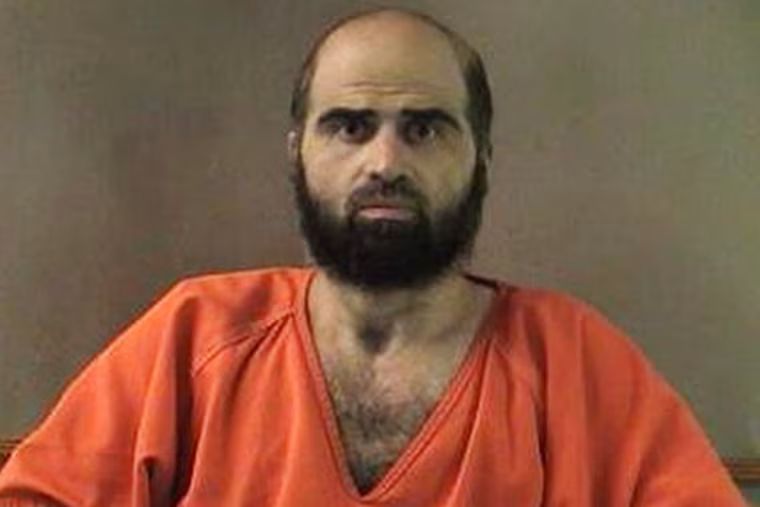
The United States plans to livestream the execution of former Army Major Nidal Malik Hasan, who was convicted of killing 13 people in a 2009 shooting at Fort Hood, Texas, in a move that has triggered widespread criticism from human rights advocates, religious leaders and politicians.
The execution is scheduled for December 3, 2026, at Fort Hood, with the US Department of Defense confirming that the public will be able to watch the proceedings online.
US Defence Secretary Pete Hegseth announced the plan during an interview with conservative media outlet Real America’s Voice, saying the execution would be made public to demonstrate the consequences of serious crimes.
Follow PenTalk News
Get breaking news, important updates and the latest stories directly on your phone.
“We’ll make sure that people are able to watch it, that it’s public,” Hegseth said, adding that people needed to understand there were serious consequences for such acts.
The Pentagon subsequently confirmed that the execution would be livestreamed, although details about the broadcast arrangements have not yet been fully disclosed.
If carried out as scheduled, the execution would mark the first time the US military has livestreamed an execution for the general public. It would also be the first military execution in the United States since 1961 and the first military firing-squad execution since 1945.
## What Happened at Fort Hood in 2009?
Hasan, an Army psychiatrist who held the rank of major, opened fire at the Soldier Readiness Processing Center at Fort Hood on November 5, 2009.
The shooting occurred as soldiers waited for medical examinations and other checks ahead of deployment. Thirteen people were killed, while 32 others were wounded.
The attack became one of the deadliest shootings ever recorded at a US military installation and raised serious questions about security procedures and the military’s handling of warning signs before the incident.
During his 2013 court-martial, Hasan represented himself and was convicted of 13 counts of premeditated murder and 32 counts of attempted premeditated murder. The military jury subsequently sentenced him to death.
Hasan admitted responsibility for the shooting during the proceedings and said he believed he was acting to protect Muslims from US military operations overseas.
He was shot by responding law enforcement officers during the attack and was left paralysed from the waist down. He now uses a wheelchair.
## Trump Approves Execution by Firing Squad
The US Army announced that President Donald Trump approved Hasan’s death sentence on October 2, 2026, following the completion of the military appellate process.
Acting Secretary of the Army Adam Telle subsequently directed that the execution take place on December 3 at 1 p.m. Central Standard Time at Fort Hood, Texas.
The Army said the date was selected in accordance with military regulations governing executions. The US Supreme Court had denied Hasan’s request to review his court-martial conviction in March 2025.
Under the military justice system, the president has the authority to approve a death sentence for a military prisoner. The execution must also comply with the applicable legal and procedural requirements.
Although the execution date has been set, the actual proceedings remain subject to any legal developments that could affect its implementation.
## Livestream Plan Draws Human Rights Criticism
The decision to broadcast the execution has generated a fresh debate over the death penalty, the dignity of prisoners and whether executions should be presented to the public as a deterrent.
The United Nations human rights office criticised the proposed livestream, warning that publicly broadcasting an execution could amount to cruel, inhuman or degrading treatment.
The criticism reflects longstanding international concerns about public executions and the risks of turning state punishment into a spectacle.
Religious leaders have also called on the US government to reconsider the plan. Archbishop Paul Coakley, president of the United States Conference of Catholic Bishops, condemned the proposal and urged authorities not to proceed with the public broadcast.
Some American lawmakers have also questioned the decision, including Republican Senator Thom Tillis, who said he supported Hasan facing the death penalty but objected to making the execution public.
Others have argued that broadcasting the killing could undermine the principles the government says it is seeking to defend.
The debate extends beyond whether Hasan should be executed. It also raises questions about the limits of public access to state punishment and the potential impact of exposing viewers, including children, to footage of a person’s death.
## A Rare Moment in US Military History
Military executions have become extremely rare in the United States.
The last US military execution took place on April 13, 1961, when Army Private John A. Bennett was hanged after being convicted of rape and attempted murder involving an 11-year-old Austrian girl.
The last known US military execution by firing squad occurred on November 9, 1945, when Army Private Eddie Slovik was shot for desertion during the Second World War.
Hasan’s planned execution would therefore represent a significant departure from decades of military practice, particularly because of the intention to broadcast it live to the public.
Public executions were once conducted openly in the United States, but the practice largely disappeared during the 20th century. Modern executions are generally carried out in controlled settings with access restricted to authorised witnesses and representatives of the media.
The proposed livestream has consequently raised questions about how the broadcast would be managed, who would be allowed to watch and what safeguards would be put in place to prevent unrestricted exposure to potentially disturbing footage.
## What Happens Next?
The Pentagon has said further details about the livestream will be provided, but it has not fully explained how members of the public will access the broadcast.
The planned execution is scheduled for December 3, 2026, at Fort Hood, subject to any legal or procedural developments.
The case has reopened a difficult debate in the United States: how the government should respond to one of the deadliest attacks on American soldiers on home soil, and whether broadcasting the execution of the convicted perpetrator serves justice or risks turning punishment into a public spectacle.
For the families of those killed and wounded in the 2009 attack, the case remains connected to a tragedy that changed many lives. For the wider public, the proposed livestream has become a test of how far a government should go in making the administration of the death penalty visible.
Source: AP