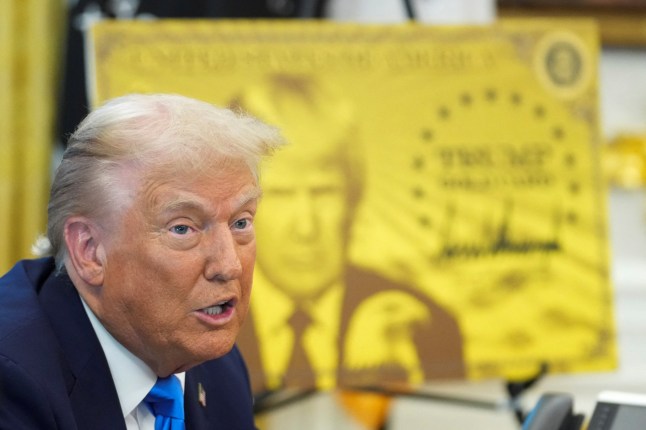
President Donald Trump has unveiled the Trump Gold Card, a visa program offering wealthy foreigners U.S. residency in exchange for a $1 million payment.
“They’re going to spend a lot of money to come in,” Trump said at the Oval Office on Friday. “It’s going to raise billions of dollars, money that will reduce taxes, pay off debt, and support other good things.”
Gold and Corporate Visa Options
The official website, trumpcard.gov, states that applicants who pay $1 million plus a processing fee and pass vetting will receive U.S. residency “in record time.” A total of 80,000 cards are available, Commerce Secretary Howard Lutnick confirmed.
Follow PenTalk News
Get breaking news, important updates and the latest stories directly on your phone.
Corporations sponsoring employees face a higher cost of $2 million under the Trump Corporate Gold Card. This option allows companies to transfer the benefit between employees, subject to a transfer fee, DHS vetting, and an annual maintenance fee. The vetting fee is set at $15,000. Holders of both the Gold and Corporate cards will pay global tax and gain a pathway to U.S. citizenship.
“We’re going to keep people who will be very productive,” Trump said. “Companies are paying large sums for this, and they are happy with the opportunity.”
Platinum Card and Visa Replacements
The administration also announced a Trump Platinum Card, priced at $5 million. It does not provide a citizenship pathway but allows holders to stay in the U.S. for up to 270 days without paying tax on foreign income.
The Gold Card replaces the EB-5 investor visa, which required foreigners to invest in projects that created U.S. jobs. Lutnick added that 80,000 Gold Cards will also replace the EB-1 and EB-2 visa categories. He predicted that the Gold Card will generate over $100 billion in revenue, while the Platinum Card could bring in $1 trillion.
“We’re going to take only extraordinary people at the very top,” Lutnick said. “Instead of competing with Americans for jobs, they will build companies and create employment opportunities.”
Industry group Invest in the USA, which represents the EB-5 Regional Center Program, praised the administration’s push to expand investment-based immigration.
Higher Fees for H-1B Visas
Trump also signed an order raising the cost of H-1B visas. Companies must now pay $100,000 per year for each visa, which allows them to hire foreign workers in specialized fields.
H-1B visas remain valid for three years and can be renewed once, for a total of six years. “If you’re going to train people, you’re going to train Americans,” Lutnick said.
However, immigration experts warn the new policy will damage industries that rely on global talent.
“A $100,000 fee for H-1B petitions would be devastating,” said immigration attorney J. Mike Sevilla. “It would severely limit the hiring of foreign professionals. Practitioners are watching closely to understand the impact and advise clients.”