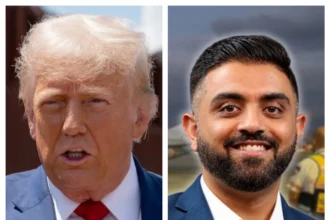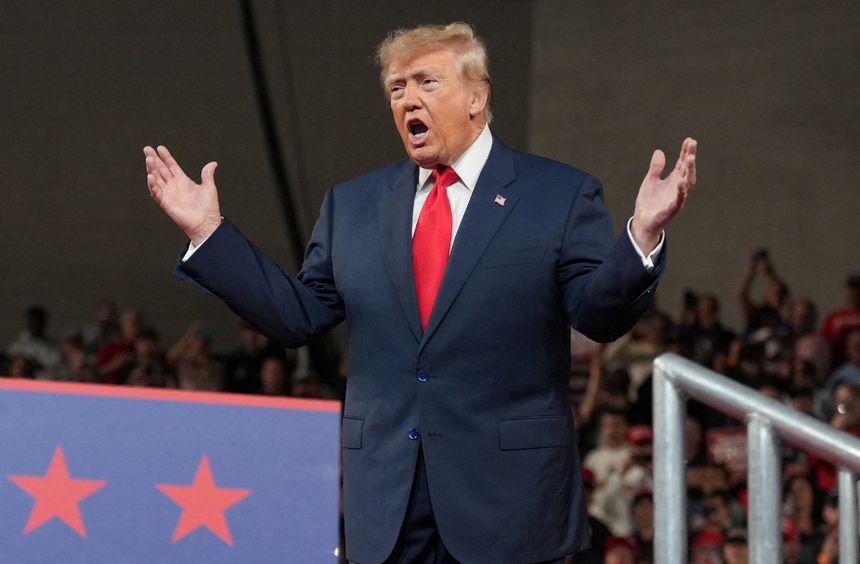
US President Donald Trump has announced an immediate energy ceasefire between Russia and Ukraine, but uncertainty remains over the agreement after Ukrainian President Volodymyr Zelenskyy said Kyiv was waiting for further details from Washington.
Trump made the announcement on Sunday, October 11, 2026, claiming that both countries had agreed to stop attacks on each other’s energy infrastructure.
However, the announcement caught Ukraine by surprise, with Zelenskyy initially telling Axios that he had not been informed of the reported agreement.
Follow PenTalk News
Get breaking news, important updates and the latest stories directly on your phone.
“The ceasefire announcement was news for me,” Zelenskyy was quoted as saying.
He added that Ukraine would accept the arrangement if Russia agreed to observe it, urging Washington to clarify when the ceasefire would begin.
“If President Trump negotiated it with Putin — please tell us when the ceasefire begins — we are ready and we will accept it,” he said.
Following Trump’s announcement, Zelenskyy reiterated Ukraine’s support for efforts to reduce attacks on energy infrastructure, while stressing that Russia must also commit to the arrangement.
In a statement posted on social media, the Ukrainian president said Kyiv was awaiting details from the American government.
He also discussed the announcement with NATO Secretary-General Mark Rutte, Canadian Prime Minister Mark Carney and Finnish President Alexander Stubb.
Zelenskyy has maintained that Ukraine is prepared to stop striking Russian energy facilities if Moscow halts attacks on Ukrainian power plants and other critical infrastructure.
He has also insisted that any agreement must include reliable guarantees to prevent either side from using a pause in attacks to gain a military advantage.
As of Sunday, Russia had not publicly confirmed Trump’s announcement, leaving questions about whether a formal agreement had been reached and whether both sides would immediately comply.
The uncertainty is significant because energy infrastructure has remained a major target throughout the war. Attacks on power plants, oil refineries and other facilities can disrupt electricity supplies, heating and fuel distribution, placing additional pressure on civilians.
Ukraine has repeatedly accused Russia of targeting its energy system, while Kyiv has defended strikes against Russian oil refineries as part of its response to Moscow’s attacks.
Reuters reported on Sunday that Zelenskyy said Russian forces were continuing attacks on Ukrainian energy targets despite Trump’s announcement. He also referred to strikes affecting a combined heating and power facility in Kharkiv.
The Ukrainian leader said the proposed ceasefire would be welcome if it became a reality, but stressed that Russia’s participation was essential.
The latest development comes amid renewed disagreements between Trump and Zelenskyy over how to end the war.
Trump has recently criticised Ukraine’s attacks on Russian oil refineries and called on Kyiv to halt them. He has argued that the strikes have contributed to pressure on fuel markets.
The US president’s announcement also followed a separate decision concerning Russian diesel supplies, which has drawn criticism from Zelenskyy.
The Ukrainian leader has argued that easing pressure on Moscow without securing an end to attacks on Ukraine’s energy infrastructure could allow Russia to continue its military campaign.
Trump’s latest statement therefore raises questions about the terms of any proposed arrangement, particularly whether it requires both countries to stop attacks simultaneously and how compliance would be monitored.
For now, Ukraine has expressed its willingness to participate, while Russia’s position remains unconfirmed.
An energy ceasefire would focus specifically on attacks against energy-related facilities rather than automatically ending the wider war.
If implemented and respected by both sides, such an arrangement could help protect electricity generation, heating systems, fuel infrastructure and other essential services as colder weather approaches.
However, its effectiveness would depend on clear terms, reciprocal commitments and a mechanism for addressing alleged violations.
Trump has described the ceasefire as effective immediately, but the absence of publicly confirmed details from both Moscow and Kyiv means it remains unclear how the arrangement would operate in practice.
The immediate question is whether Russia will formally confirm its participation and whether both countries will halt attacks on each other’s energy infrastructure.
Until that becomes clear, the announcement represents a potential step towards reducing the impact of the war on essential services rather than confirmation of a fully implemented ceasefire.
Sources: Reuters