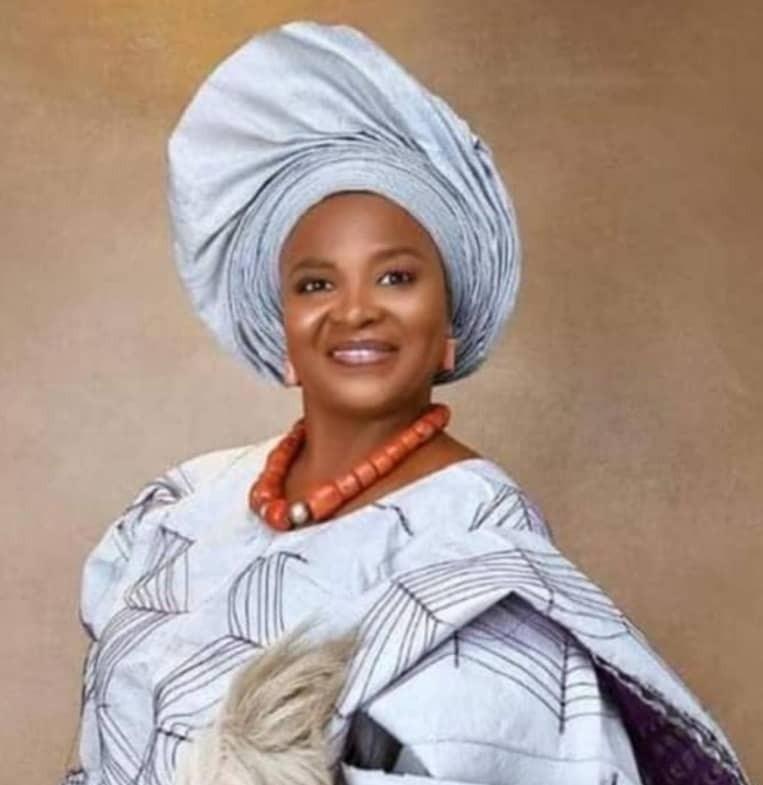
June 12, 2025 – Abuja:
On this year’s Democracy Day, former presidential candidate Prof. Funmilayo Adesanya-Davies publicly backed the call by Afenifere, the Yoruba socio-political group, for a fundamental restructuring of Nigeria. Her endorsement adds weight to the growing demand for a new constitutional framework ahead of the 2027 General Elections.
Afenifere has long advocated for a system that reflects Nigeria’s federal character and addresses issues of inequality, over-centralisation, and ineffective governance. The group emphasized that the current constitution prioritizes recurrent expenditure over capital development—an imbalance that hampers long-term national growth.
Follow PenTalk News
Get breaking news, important updates and the latest stories directly on your phone.
Afenifere’s Key Proposals:
New Constitution: Afenifere calls for the adoption of a new constitution before 2027, arguing that Nigeria’s diverse ethnic makeup demands a federal structure promoting autonomy and self-determination.
Restructuring: The group maintains that restructuring would reduce ethnic tensions and foster national cohesion. Drawing on India’s example—with over 2,000 ethnic groups—Afenifere noted that diversity can be a strength when governance is inclusive.
True Federalism: The group urged the Federal Government to implement the recommendations of the 2014 National Conference, warning that the current “winner-takes-all” system entrenches inequality and stifles progress.
Implications of Restructuring
Afenifere’s proposed reforms could significantly transform Nigeria’s political and economic landscape:
Improved Resource Allocation: A decentralized system would enhance development by allowing regions to allocate resources based on local needs.
Greater Regional Autonomy: States or regions would gain more control over internal affairs, enabling them to address local challenges more effectively.
Strengthened National Unity: By promoting fairness and inclusion, restructuring could help unify the country and reduce inter-ethnic distrust.
Adesanya-Davies’ Vision for Restructuring
Prof. Adesanya-Davies reiterated her long-standing “Advanced Restructuring Agenda,” which aligns closely with Afenifere’s position. Her proposals include:
Decentralization: Granting semi-autonomy to federating units, guided by the 2014 National Conference outcomes.
Constitutional Reform: Introducing an “8 Constitution” framework to promote federalism and national inclusivity.
Governance Alignment: Ensuring legislative and judicial conformity with constitutional mandates.
Economic Overhaul: Implementing robust economic reforms, including a stable exchange rate and non-oil sector diversification.
Job Creation: Generating 2.5 million jobs annually through creative economic policies.
Human Capital Development: Advocating for free primary school meals, scrapping JAMB, and paying graduate salaries for the first post-NYSC year.
Security and Ideology: Strengthening national security and promoting a unified national ideology.
Electoral Reforms: Enabling technology-driven electoral processes.
Gender Inclusion: Increasing women’s participation in governance to at least 40%.
A Call to Action
In a June 12 statement, Afenifere leader Oba Oladipo Olaitan emphasized the urgency of restructuring Nigeria. “The problem lies in how to weave nationhood from our diverse nationalities,” he said, highlighting the need for inclusive representation in both political and economic arrangements.
The group also raised concerns about Nigeria’s ballooning debt profile—now approaching ₦150 trillion—while the government continues to seek new loans. Afenifere cautioned that the over-reliance on oil and excessive centralization are unsustainable and impede development.
“The true spirit of June 12,” the group asserted, “demands a renewed commitment to democratic ideals and a reimagined federal Nigeria built on mutual agreement and equity.”
Prof. Adesanya-Davies’ support for these reforms signals broader momentum toward national renewal through restructuring—a path many believe is essential for unlocking Nigeria’s full potential.