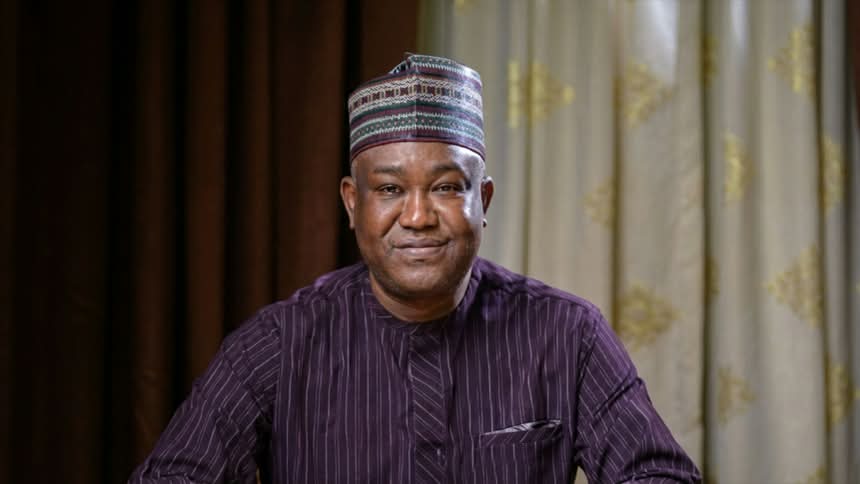
Accord Party politician Gbenga Olawepo-Hashim has reportedly joined a growing list of Nigerian political figures seeking to influence policymakers in Washington, as President Bola Tinubu and other defendants face a $57 million lawsuit in a US federal court.
Another Nigerian politician has entered the growing contest for influence in Washington ahead of Nigeria’s 2027 presidential election, with Accord Party figure Gbenga Olawepo-Hashim reportedly engaging a US lobbying firm.
The development comes amid increasing political activity in the United States involving Nigerian government representatives and opposition-linked interests, raising questions about the role of foreign lobbying in shaping perceptions of Nigeria’s political landscape ahead of the next general election.
Follow PenTalk News
Get breaking news, important updates and the latest stories directly on your phone.
According to The Africa Report, Olawepo-Hashim is the fourth Nigerian political figure to seek to influence Washington through lobbying arrangements. The report puts total spending on efforts to influence US policymakers ahead of the 2027 election at more than $11 million.
The development highlights the growing importance some Nigerian political actors attach to their relationships with US policymakers as preparations for the next presidential election gather momentum.
$57m Lawsuit Against Tinubu and Others
The lobbying developments have coincided with a separate legal dispute in the United States involving President Bola Tinubu, the Federal Government of Nigeria, former aviation minister Femi Fani-Kayode and Washington-based lobbying firm DCI Group.
The lawsuit was filed on September 28, 2026, at the US District Court for the District of Columbia by lobbyist Karl Von Batten. It seeks $57 million in damages over allegations that include defamation and a conspiracy to kidnap and physically harm him.
According to a report by Premium Times, the claims have not been established by a court and remain disputed.
The damages sought include $36 million jointly from Tinubu and the Nigerian government, $3 million from Fani-Kayode and $18 million from DCI Group, according to the plaintiff’s public announcement.
The case places competing lobbying interests at the centre of a dispute involving Nigerian political figures and their representatives in the United States.
DCI Group, which was reportedly hired by the Nigerian government to undertake lobbying activities in the United States, has rejected the allegations made against it.
The firm described the claims as unfounded and said its work for the Nigerian government was focused on strengthening relations with US policymakers.
Fani-Kayode’s office also told Premium Times that he had not been formally served with the court papers and maintained his denial of the allegations.
His office had previously indicated that he intended to pursue a $100 million counterclaim against Von Batten, although the report did not confirm that such a counterclaim had been filed.
At the time of Premium Times’ report on October 9, the Presidency had not provided a substantive response to the newspaper’s enquiries about the lawsuit.
The filing of a lawsuit does not establish that the allegations against the named defendants are true. The case will depend on the evidence presented and the court’s eventual determination.
The dispute also involves competing political interests represented by different lobbying firms.
According to Premium Times, Von Batten has been working for former Vice-President Atiku Abubakar, while DCI Group has been engaged by the Nigerian government.
The arrangement places representatives associated with different political interests within the same Washington lobbying environment as Nigeria moves towards the 2027 election.
The reported activities have drawn attention to the role of lobbying firms in presenting political positions, engaging policymakers and seeking to influence discussions about Nigeria in the United States.
However, the existence of separate lobbying arrangements does not, by itself, establish that the politicians or organisations involved coordinated their activities or participated in the allegations contained in the lawsuit.
Olawepo-Hashim’s 2027 Presidential Ambition
Olawepo-Hashim’s reported entry into the Washington lobbying arena comes as he pursues his presidential ambition under the Accord Party.
On October 5, 2026, the Federal High Court in Abuja ordered the Accord Party to recognise him as its presidential candidate and forward his name to the Independent National Electoral Commission (INEC).
Justice Mohammed Garba Umar ruled that the party should submit his name to INEC following a dispute over its May 30 presidential primary.
The court rejected the party’s position that no primary had taken place, citing evidence relating to Olawepo-Hashim’s nomination process. The ruling followed his legal challenge over the party’s failure to submit his name to the electoral commission.
The court decision represents a separate domestic legal development in his pursuit of the 2027 presidency. His reported engagement with a US lobbying firm adds an international dimension to the political activity surrounding his ambition.
The growing use of US lobbying firms by Nigerian political interests underscores the importance placed on relations with Washington ahead of the next presidential election.
For the Nigerian government, engagement with US policymakers can serve diplomatic and policy objectives. For opposition-linked figures, lobbying can provide a channel for presenting their positions and seeking international attention.
The central question is how these arrangements may shape discussions about Nigeria’s political direction, governance and democratic process in the months leading up to the election.
The $57 million lawsuit also raises legal questions that remain unresolved. The defendants’ responses, the evidence presented and subsequent court proceedings will be important in determining the case’s direction.
For now, Olawepo-Hashim’s reported move into the lobbying arena and the legal dispute involving Tinubu illustrate two related but distinct developments: the growing contest for influence in Washington and the legal scrutiny facing several individuals and organisations involved in the dispute.
As the 2027 election approaches, further disclosures about lobbying agreements, their funding and the progress of the US lawsuit are likely to attract attention in Nigeria and abroad.