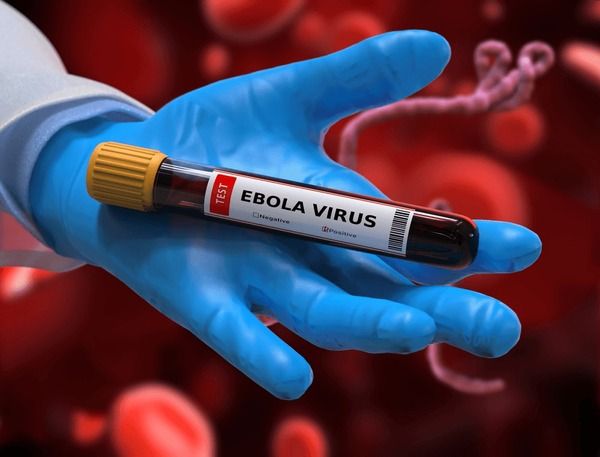
The Democratic Republic of Congo’s latest Ebola outbreak has killed 3,007 people, according to figures released Wednesday by the Congolese National Institute of Public Health.
The agency reported 6,186 confirmed cases, putting the outbreak’s case fatality rate at 48.6 percent. At least 1,409 patients have recovered from the disease.
Authorities declared the outbreak on May 15 in Ituri province, a remote area in northeastern DRC. Since then, the virus has spread to six provinces, many of which face insecurity and have limited government presence because of armed groups operating in the region.
Follow PenTalk News
Get breaking news, important updates and the latest stories directly on your phone.
Health officials are struggling to keep up with the growing number of infections. Violence and resistance from some communities have also complicated efforts to find patients quickly and get them into treatment.
The World Health Organisation estimates that about 60 percent of those who die from the disease do so outside treatment centres. The figure underscores the difficulty health workers face in identifying infected people and providing care before their condition becomes fatal.
The current outbreak is linked to the Bundibugyo species of the Ebola virus. Unlike the more common Zaire strain, there are currently no approved vaccines or treatments specifically for Bundibugyo Ebola.
The WHO expects clinical trials of three potential vaccines to begin in October or November.
WHO Director-General Tedros Adhanom Ghebreyesus said two vaccines targeting the Bundibugyo virus have already entered safety testing in the United Kingdom and Canada.
The global health agency has also backed a large-scale human trial of Ervebo, a Merck-developed vaccine approved for protection against the Zaire strain, to establish whether it can also provide protection against Bundibugyo Ebola.
Preliminary findings indicate that Ervebo may provide some level of protection against the strain.
In July, 16,250 doses of Ervebo were delivered to the DRC for frontline healthcare workers. Vaccinations began soon after in Kisangani, the capital of northeastern Tshopo province.
WHO vaccines chief Kate O’Brien said healthcare workers should receive Ervebo within the framework of research aimed at determining whether the vaccine can protect against the Bundibugyo strain.