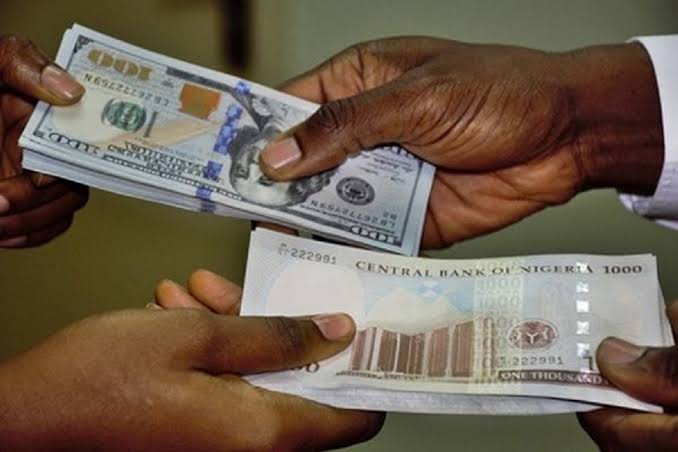
On Friday, April 18, 2025, the Naira continued its decline in Nigeria’s parallel market. The Dollar was bought for ₦1,615 and sold for ₦1,620 by Bureau De Change (BDC) operators in Lagos. These rates are higher than the official ones set by the Central Bank of Nigeria (CBN).
The official exchange rates for the Dollar at the CBN ranged from ₦1,595 to ₦1,603. However, the CBN does not recognize the black market and continues to urge Nigerians to obtain foreign exchange through official channels.
Dollar to Naira Exchange Rates (April 18, 2025):
Follow PenTalk News
Get breaking news, important updates and the latest stories directly on your phone.
Black Market (Lagos):
Buying Rate: ₦1,615
Selling Rate: ₦1,620
CBN Official Market:
Highest Rate: ₦1,603
Lowest Rate: ₦1,595
Despite the CBN’s efforts to stabilize the exchange rate, Nigerians still rely on the parallel market. This is due to limited access to dollars through banks and high demand for foreign currency.
The Lagos Chamber of Commerce and Industry (LCCI) has raised concerns over the new 14 percent tariff imposed by former U.S. President Donald Trump. This tariff threatens Nigeria’s exports to the U.S., particularly in the non-oil and non-energy sectors. These exports were valued at ₦323.96 billion in 2024.
LCCI President Gabriel Idahosa called for a strategic and proactive response from the Nigerian government. He emphasized that addressing the tariff hike should be a top priority to protect Nigerian businesses.
“With Trump’s tariffs affecting Nigeria’s non-oil exports, a measured and proactive response is necessary,” Idahosa stated.
LCCI Pushes for Trade Diversification and Regional Cooperation
Idahosa also urged the Nigerian government to reduce reliance on a few trade partners. He recommended expanding trade with emerging markets in Asia, Latin America, and Africa.
“Nigeria should look beyond traditional partners. Expanding bilateral agreements with countries in Asia and Latin America, along with strengthening intra-African trade under the AfCFTA, is vital,” Idahosa said.
This approach, he argued, will help shield Nigeria from future trade disruptions while ensuring a more resilient economy.