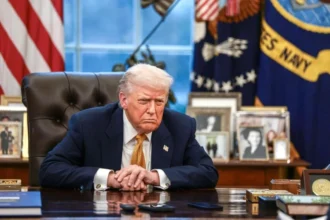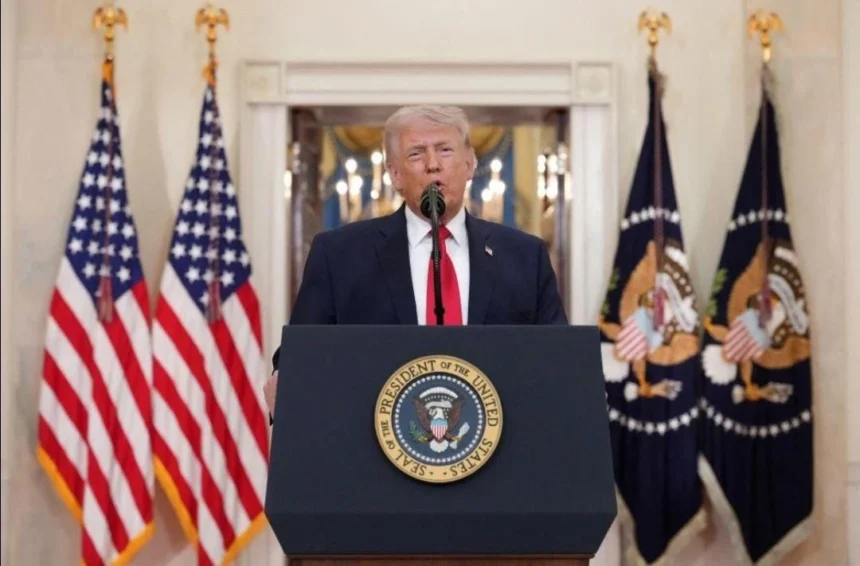
The Democratic Party has secured control of both the United States Senate and House of Representatives following a sweeping victory in the November 3 midterm elections, dealing a significant blow to President Donald Trump and his Republican Party.
The results represent a major shift in Washington’s political landscape and could limit Trump’s ability to advance his legislative agenda during the remaining two years of his presidency.
Democrats recorded significant victories across several states traditionally considered Republican strongholds, including Texas, South Carolina, Iowa and Kansas.
Follow PenTalk News
Get breaking news, important updates and the latest stories directly on your phone.
In Texas, Democrat James Talarico defeated Republican Ken Paxton in a historic Senate victory, while Annie Andrews secured an upset win over Republican Darline Graham in South Carolina.
The party also recorded important Senate victories in Iowa and Kansas, further strengthening its position in the upper chamber. Other notable wins included North Carolina and Ohio.
In the House of Representatives, Democrats overturned several Republican-held seats across the country, giving them the majority needed to regain control of the chamber.
The victories mean Democrats will have greater powers to scrutinise the Trump administration, investigate its policies and challenge decisions made by the White House.
Democrats Record Major Gubernatorial Victories
The Democratic Party also made significant gains in gubernatorial elections, with several candidates defeating Republican opponents in closely watched contests.
In Ohio, Democrat Amy Acton defeated Republican Vivek Ramaswamy to secure the governorship in a state that has increasingly leaned towards the Republican Party in recent elections.
The result was another setback for Republicans, particularly given Ramaswamy’s political standing and his close association with Trump.
Trump Reacts to Republican Election Losses
Trump responded to the election results through a series of posts on his Truth Social platform, appearing to distance himself from the Republican Party’s disappointing performance.
In one post, the president wrote: “I wasn’t on the ballot and if I was, we would have won in a landslide!”
He subsequently suggested that he might become a political commentator, saying he would discuss the reasons some Republican candidates won while others lost.
Before voting ended, Trump had also warned that he could veto legislation passed by Democrats if they gained control of either chamber of Congress.
Speaking to CBS News, he described the presidential veto as his ultimate power and indicated that he was prepared to use it.
However, Trump later told The New York Times that he was willing to accept the election results and work with Democrats.
What Democratic Control Means for Trump’s Presidency
The midterm elections are held every two years, halfway through a US president’s four-year term. They are widely regarded as a referendum on the performance of the sitting president and the ruling party.
With Democrats now controlling both chambers of Congress, Trump’s administration is expected to face increased scrutiny from lawmakers.
The new Democratic majority could launch investigations into government activities, challenge administration policies and create greater opposition to the president’s legislative priorities.
The outcome is expected to reshape political relations in Washington as Trump enters the final two years of his presidency, with Republicans facing the challenge of rebuilding their support ahead of the next presidential election.
Source: Associated Press (AP)