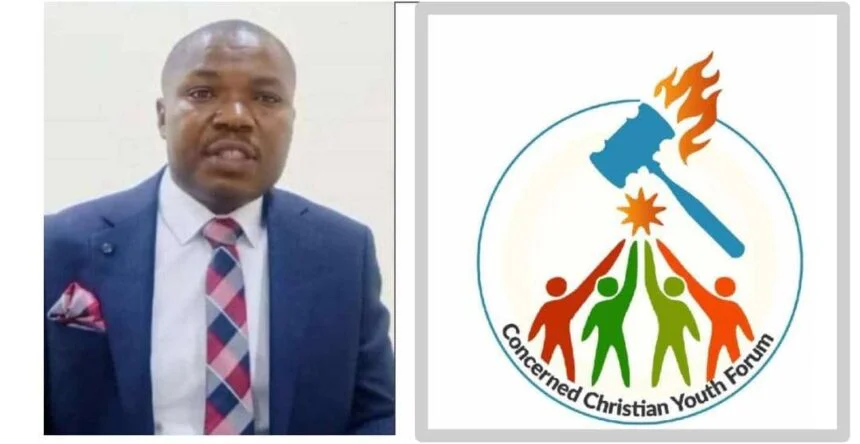
The Concerned Christian Youth Forum (CCYF) has been alerted to a troubling policy recently introduced by Governor Umar Bago, which mandates that all religious preachers in Niger State submit their sermons for government approval before public delivery.
Niger State has, in recent times, been under the spotlight for concerning reasons. Beyond the alarming insecurity challenges, the state government has now compounded public anxiety by introducing a law that directly interferes with religious practice. Requiring preachers to obtain government approval prior to delivering sermons is an unwarranted intrusion and a gross violation of constitutional freedoms.
While we unequivocally condemn reckless, hateful, or inciteful preaching, the Concerned Christian Youth Forum (CCYF) rejects this policy as ill-conceived, oppressive, discriminatory, and unconstitutional. This law amounts to religious censorship and infringes upon the fundamental rights of Nigerians to freedom of thought and religion, as guaranteed under Sections 38 and 39 of the Constitution of the Federal Republic of Nigeria.
Follow PenTalk News
Get breaking news, important updates and the latest stories directly on your phone.
Internationally, Article 18 of the Universal Declaration of Human Rights (UDHR) and the International Covenant on Civil and Political Rights (ICCPR), both ratified by Nigeria, recognize freedom of religion and consider such restrictions unlawful and oppressive. Similarly, the United Nations Declaration on the Elimination of All Forms of Intolerance and of Discrimination Based on Religion or Belief (1981) affirms the right to manifest, practice, or express one’s religion freely, without fear of discrimination or censorship.
Religion is an extremely sensitive matter in Nigeria and globally, and governments are expected to handle religious affairs with prudence and respect. Introducing policies that curtail religious expression demonstrates poor judgment, especially in a state already grappling with critical socio-economic challenges.
Niger State faces widespread poverty, with over 64% of its population living below the poverty line, despite being the largest state by landmass. Basic infrastructure, including electricity, healthcare, potable water, and education, remains largely inaccessible. The adult literacy rate, at 38.1% in 2022, lags significantly behind the national average of 63.16%. These are the issues that a responsible government should prioritize, as poverty and underdevelopment often exacerbate insecurity and social unrest.
Policies aimed at improving the welfare, economic opportunities, and overall development of the state should take precedence over diversionary tactics such as restricting religious freedom.
We, therefore, join other concerned citizens and organizations, across religious and regional lines, in condemning this oppressive, retrograde, and unconstitutional law. While we oppose inflammatory and inciteful speech, we reaffirm our commitment to religious freedom and peace.
We respectfully call on the government of Niger State to rescind this law immediately. Doing so aligns with the principles of good governance, respect for the Constitution, the Rule of Law, and Nigeria’s obligations under international human rights instruments.
Signed:
James Paul Adama
Convener, Concerned Christian Youth Forum
Abuja, Nigeria