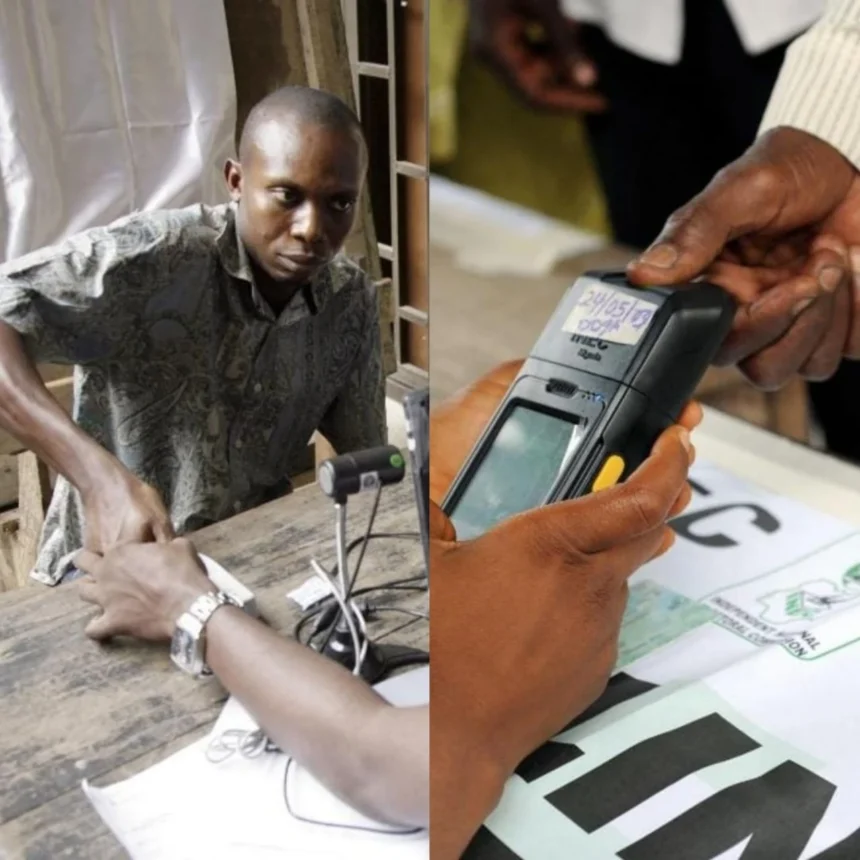
The Independent National Electoral Commission (INEC) has linked irregularities discovered in Nigeria’s preliminary voter register to some registration officers across the country, following concerns over suspected AI-generated photographs and questionable voter records ahead of the 2027 general elections.
INEC’s Director of Information and Communication Technology, Dr Lawrence Bayode, disclosed this on Friday, October 30, during an interview on Arise Television’s The Morning Show. He explained that some registration officers allegedly used their authorised login details to introduce irregularities into the commission’s voter registration system.
According to Bayode, the officers involved were identified across different states, although he stressed that the issue did not involve all registration officers.
Follow PenTalk News
Get breaking news, important updates and the latest stories directly on your phone.
He explained that registration officers have access to the system to register voters, but some allegedly used that access in ways that resulted in questionable entries in the national register.
Bayode said the commission discovered the irregularities through its Automated Biometric Identification System (ABIS), which was used to examine the registration records.
The ICT director also clarified that not all suspicious photographs found in the register were generated using artificial intelligence. While some were AI-generated, others resulted from what he described as very poor registration practices.
He said INEC had identified some of the irregularities and was already working to clean up the affected records.
However, Bayode said he could not explain why the officers involved introduced the questionable entries into the system.
The disclosure comes amid growing public concerns following the publication of INEC’s preliminary register of voters on its website on October 26.
The online publication attracted criticism after Nigerians spotted suspicious photographs, alleged duplicate registrations and other questionable details in some voter records.
Screenshots of entries containing photographs suspected to be AI-generated also circulated on social media, raising questions about the accuracy of the register ahead of the next general elections.
INEC had earlier confirmed that it identified and flagged questionable registration records during the physical display of the preliminary register across Registration Areas nationwide between October 9 and October 15.
In a statement issued on October 27, the commission said it had commenced a review of the affected records and would take appropriate corrective action.
The electoral body also clarified that the register uploaded online was the original preliminary version displayed during the exercise and did not reflect all the data-cleaning activities already underway.
Final Voter Register Expected in December
INEC has maintained that the online register is not the final certified Register of Voters.
The commission explained that the display, claims and objections exercise allows registered voters and other stakeholders to identify errors, challenge questionable entries and request necessary corrections before the register is finalised.
According to INEC, the verification, adjudication and data-cleanup processes will be completed before the final Register of Voters is certified on December 15, 2026.
The latest disclosure has renewed attention on the integrity of Nigeria’s voter registration process as preparations continue for the 2027 general elections.
The accuracy of the final register will remain important in ensuring that eligible voters are properly captured and that questionable records are addressed before the elections.