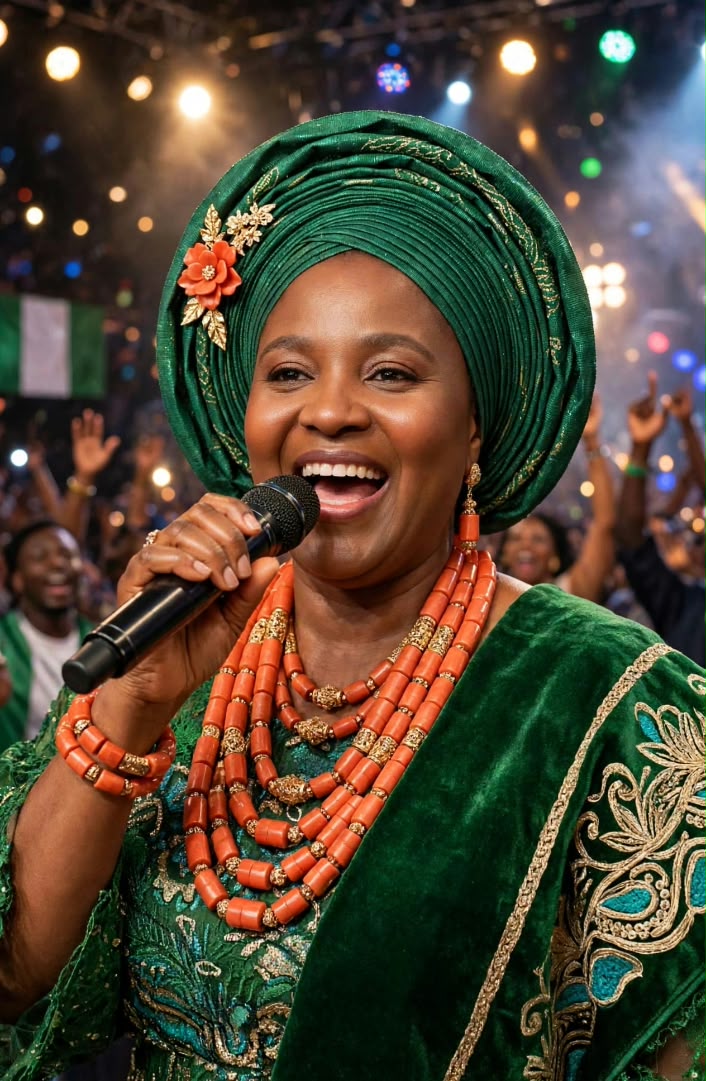
As political parties begin preparations and strategic alignments ahead of the 2027 general elections, former presidential candidate and gender advocate, Amb. Prof. Funmilayo Adesanya-Davies, has called for greater political participation and leadership opportunities for Nigerian women, insisting that the country cannot achieve meaningful development without their active involvement in governance.
Adesanya-Davies made the call in a press statement dated November 2, 2026, in which she urged political parties, government institutions, traditional rulers, religious leaders and the media to take deliberate steps towards addressing the underrepresentation of women in Nigeria’s political system.
According to her, the 2027 elections should provide an opportunity for Nigerian women to move beyond serving as voters, campaign mobilisers and supporters to becoming active contenders for elective offices and positions of political authority.
Follow PenTalk News
Get breaking news, important updates and the latest stories directly on your phone.
Women Remain Underrepresented in Nigerian Politics
Adesanya-Davies noted that despite accounting for nearly half of Nigeria’s population and a significant proportion of registered voters, women remain poorly represented in elective and appointive political positions.
Citing figures attributed to the National Bureau of Statistics (NBS) and the Independent National Electoral Commission (INEC), she said women constitute approximately 49.4 per cent of Nigeria’s population and about 47.5 per cent of registered voters in the 2023 general elections.
However, she highlighted the low number of women in the National Assembly, noting that only four of the 109 senators and 17 of the 360 members of the House of Representatives in the 10th National Assembly are women.
She also pointed out that no woman emerged as a state governor following the 2023 elections, while women’s representation in state legislatures and local government leadership positions remains low.
The gender advocate described the situation as a major challenge to inclusive democracy, arguing that Nigeria has yet to translate women’s numerical strength into meaningful political representation.
She further recalled that the country’s National Gender Policy, introduced in 2006 and revised in 2021, recommended 35 per cent representation for women, but the target has remained largely unrealised.
Adesanya-Davies cited countries such as Rwanda, South Africa, Senegal and Mozambique as examples of African nations with higher levels of women’s representation in parliament.
Seven Major Challenges Facing Women in Politics
The former presidential candidate identified seven major factors limiting women’s participation in Nigerian politics.
These include the high cost of nomination forms and election campaigns, male-dominated political party structures, political violence and intimidation, cultural and religious stereotypes, family responsibilities, inadequate media attention and gaps in the legal framework.
She argued that the increasing monetisation of politics makes it difficult for many women to compete for elective positions, particularly where nomination forms for major political offices cost millions of naira.
She also raised concerns about the influence of political godfathers and male-dominated party structures, which she said often limit women’s access to party tickets and decision-making positions.
On security, Adesanya-Davies highlighted threats, harassment, intimidation, kidnapping, cyberbullying and character attacks as additional obstacles confronting women who seek political office.
She added that traditional expectations surrounding domestic responsibilities, alongside negative stereotypes about women’s leadership abilities, further discourage many qualified women from participating in politics.
The gender advocate also criticised what she described as inadequate media coverage of female politicians, arguing that attention is sometimes directed towards their appearance and family lives rather than their policy proposals and leadership capacity.
Why Women’s Political Participation Matters
Adesanya-Davies maintained that increasing women’s representation in governance should not be viewed as a favour or special privilege but as an important component of national development.
She argued that women’s participation can contribute to improved governance, stronger democratic institutions, economic development and more inclusive approaches to peace and security.
According to her, Nigeria cannot afford to exclude a significant portion of its human resources from political decision-making, particularly at a time when the country is facing economic challenges, insecurity and other development concerns.
She also emphasised the importance of women’s perspectives in addressing security challenges across different parts of the country, including the North-East, North-West and South-East.
Demands for Greater Women’s Representation Ahead of 2027
To address the situation, Adesanya-Davies outlined several recommendations directed at the Federal Government, INEC, political parties, Nigerian women, traditional institutions and the media.
She called on President Bola Ahmed Tinubu and the Federal Government to give attention to the Reserved Seats for Women Bill, identified in her statement as HB 1349, which seeks to create additional legislative seats for women at the federal and state levels.
She also urged INEC to strengthen enforcement of existing electoral provisions relating to inclusion and ensure that political parties provide transparent information on women’s participation in their internal electoral processes.
Political parties, including the All Progressives Congress (APC), Peoples Democratic Party (PDP), Labour Party (LP), New Nigeria Peoples Party (NNPP), African Democratic Congress (ADC) and Social Democratic Party (SDP), were encouraged to introduce measures that would increase women’s access to nomination opportunities.
Among her recommendations were reserved candidacy opportunities for women, affordable or free nomination forms, stronger funding for party women’s wings and more inclusive approaches to party primaries.
She further encouraged Nigerian women to actively pursue elective positions at all levels, from ward councillorship to the presidency.
For women who may not have the resources to contest, she suggested supporting female candidates financially, participating in their campaigns and establishing women-led cooperatives to raise funds for political participation.
Adesanya-Davies also appealed to men, traditional rulers and religious leaders to support women seeking political leadership, stressing that women’s participation should not be treated as a threat to cultural or religious values.
Media Urged to Give Female Politicians Equal Attention
The gender advocate called on media organisations to provide female political aspirants with fair coverage and opportunities to communicate their policy positions to the electorate.
She urged journalists to focus interviews on important national issues such as security, education, the economy and governance rather than concentrating excessively on how women combine political activities with family responsibilities.
According to her, balanced media coverage would help voters assess female candidates based on their ideas, experience and proposed policies.
‘2027 Must Be a Turning Point for Nigerian Women’
In her concluding remarks, Adesanya-Davies said the 2027 general elections should mark a shift in the political role of Nigerian women, from campaign supporters and voting blocs to active participants in leadership and governance.
She referenced historical female figures such as Funmilayo Ransome-Kuti, Margaret Ekpo and Gambo Sawaba, noting that Nigerian women have played important roles in the country’s political development.
She called for deliberate action to ensure that women are given greater opportunities to contribute to national leadership.
“Nigeria Needs Women. 2027 Needs Women. Bring Women In,” she declared.
Adesanya-Davies is a former presidential candidate of the Mass Action Joint Alliance (MAJA) in the 2019 general elections, an educationist, theologian and gender advocate. She is also the founder of the Women in Politics Initiative (WIPI).