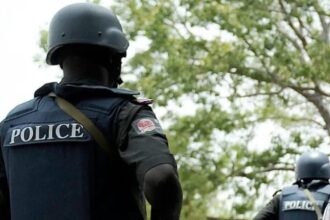
Somewhere in a police barracks tonight, an officer is putting his children to bed.
He joined the Force years ago, gave it his youth and has waited patiently for the promotion he believes he has earned. He follows the rules because he believes the rules will, in the end, work for him.
Now he hears that retired officers may be coming back.
Follow PenTalk News
Get breaking news, important updates and the latest stories directly on your phone.
And he is afraid to ask what that means for his rank, his seniority and his future.
He is afraid because he cannot see a single voice of authority willing to ask the question on his behalf.
That silence is the story I want to talk about.
The Question No One Wants to Ask
The facts are not complicated.
The rule says a public servant leaves service at 60 years of age or after 35 years of service, whichever comes first.
On January 31, 2025, the Police Service Commission (PSC) retired 455 senior police officers following a dispute over how their dates of first appointment should be computed.
The affected officers challenged the decision in court.
The National Industrial Court declared the retirement unlawful and ordered their reinstatement. The Court of Appeal later dismissed the appeals.
However, a fresh court order on September 22, 2026, halted the reinstatement process.
The legal battle is what courts are for.
What troubles me is how little has been said by those whose responsibility it is to provide clarity.
Police Service Commission: What Changed?
The Police Service Commission carries a heavy responsibility here because promotion, appointment and discipline within the Nigeria Police Force fall within its mandate.
In January 2025, the Commission retired the officers, saying they had crossed the applicable retirement threshold.
That was a major administrative decision taken at the highest level, and it affected hundreds of careers.
After the judgment against the retirement decision, the Commission said it was studying the ruling and could appeal. It eventually appealed and lost.
Then, according to reports, the Commission approved the regularisation of the affected officers’ dates of first appointment in June 2026, after which the process of bringing some of them back began.
So the question deserves to be asked directly:
What changed?
Did new information emerge that was not available when the officers were retired in January 2025?
Were their dates of first appointment wrong when the Commission retired them, or are they being treated differently now?
If the 2025 decision was correct, why has it been reversed?
And if it was wrong, who takes responsibility for the hundreds of officers who were sent home?
Either answer is serious.
The Commission owes the Nigeria Police Force and the public an explanation in plain language.
Serving officers cannot be expected to have confidence in a promotion system if major decisions affecting careers appear to move from one direction to another without sufficient explanation.
Where Is the Ministry of Police Affairs?
The Ministry does not decide police promotions. That responsibility belongs to the Commission.
But the Ministry plays an important role in policy direction concerning the police.
A dispute involving how years of service are calculated, how retirement rules are applied and how the Force plans its future is also a matter of public policy.
The Ministry should therefore explain what policy guidelines apply to service computation and retirement, and how this particular dispute fits into those guidelines.
So far, the public conversation appears remarkably quiet.
Where Are the National Assembly Committees?
The National Assembly has oversight responsibilities.
The House of Representatives Committee on Police Affairs and the Senate Committee on Police Affairs have the authority to summon officials, demand explanations and conduct hearings where necessary.
A dispute involving hundreds of senior police officers, their retirement, reinstatement, seniority and the financial implications for government deserves serious legislative attention.
If hearings have been held or public statements issued, that information needs to reach the officers and Nigerians who are affected.
If not, then there is a clear oversight gap.
Where Are Our Constitutional Lawyers?
Nigeria has some of the finest legal minds on the continent.
This issue raises questions that go beyond the individual officers involved.
How should years of public service be calculated?
How should administrative decisions on retirement be handled?
What happens when an agency changes its position after a court judgment?
What are the implications for seniority and promotion when retired officers return?
And how should government respond when different institutions interpret the same rules differently?
These are questions that deserve open legal discussion.
Silence is not neutrality.
When those who understand the law remain silent, the loudest voice often becomes the dominant voice, and the loudest voice is not necessarily the correct one.
The officers who followed the rules.
These officers have waited their turn.
If retired officers return to the same ranks, some serving officers may find their career progression affected. Years of loyalty and service could suddenly appear less valuable.
That has consequences beyond individual disappointment.
The Nigeria Police Force itself.
A police service survives on discipline, and discipline depends heavily on confidence in fairness.
An officer who believes the system is unfair may lose motivation.
And in a profession that asks people to put their lives on the line, a loss of confidence can be costly.
Public funds.
If government is required to pay salaries, arrears and other entitlements arising from prolonged legal disputes, the financial implications could be significant.
That money must ultimately come from public resources.
The future of policing in Nigeria.
This is perhaps the biggest concern.
Nigeria continues to debate the future of policing, including the possibility of state police.
If states eventually draw officers from the federal Force to establish their own structures, questions about seniority, service years, recruitment and secondment will become even more important.
If service years can become the subject of major disputes after the fact, similar controversies could emerge elsewhere.
A state police system built on uncertainty over service records would begin with a serious administrative challenge.
History has repeatedly shown that societies often appreciate the importance of strong institutions only after those institutions begin to fail.
By then, the price may already have been paid through lost lives, lost trust and lost opportunities.
Must Nigeria wait until the police are seriously damaged before we recognize the importance of protecting the institution?
The answer should be no.
What Should Happen Now?
I am not asking anyone to defy a court.
I am asking those with the authority and responsibility to speak to do so.
The Police Service Commission should explain publicly why the officers were retired in 2025, what changed by 2026 and how the Commission intends to protect the promotions, seniority and career progression of serving officers.
The Ministry of Police Affairs should clearly state the policy guidelines governing service computation and retirement.
The Senate and House Committees on Police Affairs should consider public hearings to examine the implications for seniority, government finances and administrative precedent.
The President should consider directing an appropriate high-level review involving the Attorney-General of the Federation, the Head of the Civil Service of the Federation, the Inspector-General of Police and the Police Service Commission, so that the applicable rules can be clearly interpreted and consistently applied.
Constitutional lawyers and civil society organisations should also examine the matter openly and help Nigerians understand the legal and institutional questions involved.
Because ultimately, this is bigger than 455 police officers.
It is about whether a Nigerian who gives the best years of his life to public service can trust the rules governing his career.
It is about whether institutions can change important decisions without clearly explaining why.
And it is about whether those who are responsible for protecting the institution will speak up before uncertainty becomes another crisis.
The police cannot afford to lose the confidence of their own officers.
And Nigeria cannot afford to remain silent.