A Critical Academic Article and Policy Rejoinder
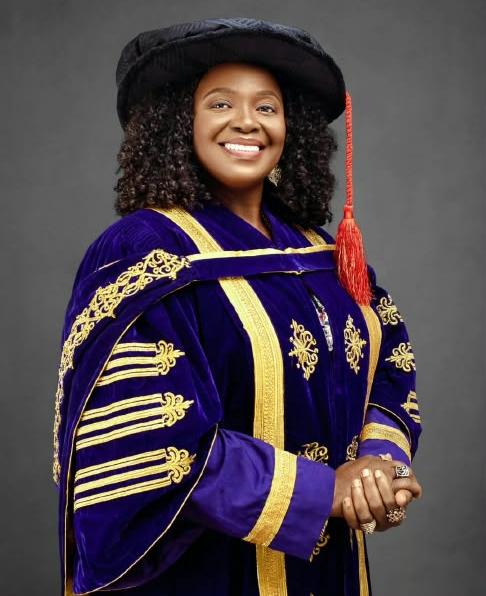
By Bishop Professor Funmilayo Adesanya-Davies
Professor, Educationist, Theologian and Human Rights Advocate
Follow PenTalk News
Get breaking news, important updates and the latest stories directly on your phone.
Date: October 28, 2026
Abstract
Religious representation, equitable access to public office, and inclusive governance are important considerations in Nigeria’s pluralistic political environment. The constitution of governing councils for eight state-owned tertiary institutions and nine other government agencies by the Kwara State Governor, AbdulRahman AbdulRazaq, effective October 16, 2026, provides an opportunity to examine the relationship between public appointments, religious diversity, administrative legitimacy, and democratic accountability. Drawing on the appointments reported by The Nation Newspaper, this article critically examines concerns about the representation of Christians in the leadership of public institutions in Kwara State. It considers the principles of merit, equity, geographical inclusion, constitutional governance, and the historical contributions of religious communities to education and social development. The article argues that public appointments should be governed by transparent, demonstrable, and inclusive criteria that protect equal citizenship without compromising professional competence. It also recognises an important evidentiary limitation: the published report does not provide the religious affiliations of all appointees or the complete membership composition of the councils. Consequently, claims of systematic religious marginalisation require further verification through official appointment records and longitudinal analysis. The article recommends transparent disclosure, legislative oversight, stakeholder engagement, and the development of an equitable public appointment framework. It concludes that Kwara State’s identity as the “State of Harmony” can be sustained only when diversity is reflected in fair administrative practices and equal opportunities for public service.
Keywords: Religious representation, marginalisation, public appointments, inclusive governance, constitutionalism, higher education, Kwara State, Nigeria.
1\. Introduction
The question of equitable representation in public institutions remains significant in Nigeria’s democratic development. In a multi-religious society, public appointments carry implications beyond administrative efficiency: they also influence public confidence, perceptions of fairness, institutional legitimacy, and the relationship between government and the communities it serves.
Against this background, the recent constitution of governing councils for eight state-owned tertiary institutions and nine other government agencies by the Governor of Kwara State, AbdulRahman AbdulRazaq, has generated concerns about the place of Christians in the state’s public leadership structure.
According to a report published by The Nation Newspaper under the title “Abdulrazaq Sets Up Councils for Eight State Tertiary Institutions, Nine Other Offices,” the appointments took effect on October 16, 2026. The affected institutions include Kwara State Polytechnic, the International Aviation College, Ilorin, the International Vocational, Technical and Entrepreneurship College, Ajase-Ipo, the Colleges of Education in Oro and Ilorin, the Colleges of Nursing Sciences in Ilorin and Oke-Ode, and the Kwara State Scholarship Board.
Other appointments cover agencies responsible for primary healthcare, rural water supply and sanitation, road traffic management, rural electrification, social investment, housing, environmental protection, mass literacy, and signage and advertisement regulation.
These institutions exercise important responsibilities in education, human-capital development, healthcare, infrastructure, public welfare, and economic advancement. Their governing councils therefore deserve scrutiny not only in terms of professional competence but also in relation to transparency, accountability, and equitable access to public leadership.
The central question of this article is:
To what extent do appointments to public governing councils in Kwara State demonstrate a commitment to religious inclusion, equal opportunity, and representative governance?
This question does not presuppose that the appointments are unlawful or discriminatory. Rather, it establishes the need for verifiable information and a transparent assessment of whether the state’s diverse communities receive fair consideration.
2. Background to the Appointments
The reported appointments encompass 17 governing councils or public bodies. The chairpersons identified in the newspaper report are as follows:
| S/N | Institution or agency | Reported chairperson |
| 1 | Kwara State Scholarship Board | Dr Ahmed Ameen Funsho |
| 2 | International Vocational, Technical and Entrepreneurship College, Ajase-Ipo | Gani Galadima |
| 3 | Kwara State Polytechnic | Engineer Musa Yeketi |
| 4 | International Aviation College, Ilorin | Professor Adua Ismail Mustapha |
| 5 | College of Nursing Sciences, Oke-Ode | Dr Afusat Ameen |
| 6 | Kwara State Agency for Mass Literacy | Hajia Riskat Lawal |
| 7 | Kwara State Primary Healthcare Board | Ayinmode Sunday Samuel |
| 8 | Kwara State Rural Water Supply and Sanitation Agency (RUWASSA) | Alhaji Muhammed Sakwa |
| 9 | Kwara State Road Traffic Management Authority (KWARTMA) | Hon. Olasunkanmi Ere-oye |
| 10 | Kwara State Rural Electrification Board | Engineer Sikirullah Abdulkareem Oladimeji |
| 11 | Kwara State Social Investment Programme (KWASSIP) | Hon. Memud Azeez Alonge |
| 12 | Kwara State Housing Corporation | Hon. Abdulazeez Oluwanilo |
| 13 | Kwara State Environmental Protection Agency (KWEPA) | Femi Aina |
| 14 | Kwara State Signage and Advertisement Agency (KWASAA) | Dr Laaro Oba Abdulkadir |
| 15 | College of Nursing Sciences, Ilorin | Amudipe Christiana Titilayo |
| 16 | College of Education, Oro | Gezinde Adedeji Amosa |
| 17 | College of Education, Ilorin | Engineer Muhammadu Suno Gofe |
Source: The Nation Newspaper report supplied for this article. The list reproduces the reported chairpersons; it does not establish the religious affiliation of every individual or the religious composition of the complete councils.
The range of institutions involved makes the appointments particularly important. Governing councils may influence institutional policy, oversight, strategic planning, resource management, and the implementation of public objectives.
The Governor has reportedly charged the appointees to justify the confidence reposed in them by supporting quality education, advancing human-capital development, and making Kwara State worth living in.
These are legitimate public objectives. However, the credibility of such objectives is strengthened when appointment procedures are transparent and citizens can reasonably trust that qualified candidates from different communities have fair opportunities to serve.
3. Conceptualising Religious Marginalisation in Public Administration
Religious marginalisation in public administration may be understood as a pattern in which individuals or communities experience reduced access to public opportunities, influence, or institutional leadership because of their religious identity.
It is important, however, to distinguish between three related but different phenomena.
First, actual discrimination occurs when decisions are made on an impermissible discriminatory basis or when applicable legal protections are violated.
Second, structural underrepresentation occurs when a community remains disproportionately absent from positions of influence over time, even where direct discriminatory intent has not been established.
Third, perceived marginalisation arises when citizens interpret appointment patterns as evidence that their community is being overlooked or insufficiently recognised.
These categories require different forms of investigation. Direct discrimination may require examination of selection criteria, decision-making records, and relevant testimony. Structural underrepresentation requires comparative data across appointments and time periods. Perceived marginalisation requires engagement with affected communities, alongside objective verification.
The Kwara State appointments should therefore be assessed using reliable evidence rather than assumptions based solely on names, titles, or perceived religious identities.
Nevertheless, perceptions of exclusion are not inherently insignificant. Where such concerns are repeatedly raised, government has a legitimate interest in addressing them through disclosure, consultation, and demonstrably fair procedures.
4. Religious Diversity and the Question of Representation in Kwara State
Kwara State has a diverse religious and cultural landscape. Christians and Muslims have contributed to its educational, economic, political, cultural, and social development. The state’s three senatorial districts—Kwara Central, Kwara North, and Kwara South—also contain communities with different demographic and religious characteristics.
Within this setting, public appointments may become symbols of whether government recognises the diversity of the population.
The concern raised by Christian stakeholders is that Christians may not be receiving representation commensurate with their participation in the state’s development and the availability of qualified professionals within their communities.
This concern warrants serious examination. It should neither be dismissed as religious agitation nor accepted as conclusively proven without sufficient evidence.
The published list identifies 17 chairpersons, but names alone cannot establish a person’s religious affiliation. Nor does the list reveal the composition of the more than 100 membership positions reportedly associated with the councils.
Consequently, an academically defensible assessment requires answers to several questions:
What are the complete membership lists of all 17 councils?
What proportion of chairpersons and council members come from different religious and geographical communities, where such information is voluntarily and appropriately available?
What professional and administrative criteria were applied in selecting the chairpersons and members?
Were qualified candidates from across the state’s communities given fair consideration?
How does the composition compare with previous appointment cycles?
Are there institutional or procedural barriers that may disadvantage particular communities?
The answers would help distinguish an isolated appointment pattern from a sustained structural problem.
The central argument is not that every appointment must be allocated according to religion. It is that government should be able to demonstrate that public appointments are made fairly, transparently, and without religious discrimination.
5. Merit, Equity and the Limits of Representation
A major consideration in public appointment policy is the relationship between merit and representativeness.
Merit-based appointments are intended to ensure that individuals possess the qualifications, experience, integrity, and competence necessary to discharge their responsibilities. Representation, on the other hand, concerns whether the process offers fair opportunities to citizens across relevant social and geographical groups.
These objectives need not conflict.
A transparent appointment system can establish minimum professional qualifications, assess candidates against published criteria, and ensure that the pool of candidates considered is sufficiently broad to avoid unjustified exclusion.
For governing councils of educational institutions, for example, relevant considerations may include academic experience, administrative competence, financial oversight, knowledge of institutional governance, and a record of integrity.
For agencies responsible for healthcare, housing, water, environmental protection, or social investment, appropriate professional and administrative expertise should remain central.
However, where several candidates satisfy the required standards, fair consideration of geographical and social diversity may strengthen institutional legitimacy and public confidence, subject to applicable law.
The objective should not be to appoint unqualified candidates to achieve religious balance. Equally, merit should not become a vague justification for a process that offers insufficient transparency or repeatedly excludes qualified candidates from particular communities.
A credible system must demonstrate both competence and fairness.
6. Constitutional and Legal Considerations
The question of equitable representation must also be considered within Nigeria’s constitutional framework.
Section 42 of the Constitution of the Federal Republic of Nigeria, 1999, as amended, addresses discrimination against citizens on specified grounds, including religion, subject to the provision’s terms and scope. It is therefore relevant to discussions about whether public decisions discriminate against individuals because of their religious identity.
Section 14(3), which concerns the composition of the Federal Government and its agencies, establishes the federal character principle in relation to the federation and its constituent units. Section 14(4) addresses the composition of state governments and their agencies, requiring the conduct of government to reflect the diversity of the people within its area of authority and the need to promote national unity.
These provisions provide important constitutional context for discussions of inclusive governance. However, their precise application to particular state governing councils, appointment procedures, and individual appointments must be assessed in light of the relevant constitutional language, enabling statutes, and applicable judicial interpretations.
The federal character principle should not automatically be treated as establishing a fixed religious quota for every public appointment. Nor should it be assumed that a perceived numerical imbalance, without more, conclusively establishes a constitutional violation.
The appropriate legal questions include whether applicable requirements have been observed, whether prohibited discrimination has occurred, and whether the appointment process complies with the relevant statutory and constitutional framework.
The Kwara State House of Assembly, within its lawful oversight responsibilities, can play a constructive role by seeking relevant records, examining applicable procedures, and encouraging transparency.
The government can likewise reduce uncertainty by publishing the criteria and procedures governing appointments to the affected councils.
7. Historical Contributions of Christian Institutions to Education and Social Development
Christian institutions have played an important historical role in the development of formal education, healthcare, literacy, and social welfare across Nigeria. Missionary schools and other faith-based institutions have contributed to the training of teachers, clergy, administrators, healthcare workers, and professionals who have served diverse communities.
These contributions form part of the wider history of Nigerian education and social development.
In Kwara State, the contributions of Christian individuals and institutions deserve recognition alongside those of Muslim organisations, traditional communities, public institutions, and other development partners.
Historical contribution, however, should not be interpreted as an automatic entitlement to a predetermined share of government appointments. Public office is a public trust, and eligibility must be assessed under the relevant legal and professional standards.
The stronger argument is that a community with qualified professionals and a substantial record of public service should not face barriers to participation because of religious identity.
Recognition of historical contributions and commitment to equal opportunity can coexist without converting public appointments into religious entitlements.
8. Governance Implications of Perceived Exclusion
The perception that a religious community is being systematically excluded from public leadership can have several consequences.
8.1 Erosion of public trust
Citizens are more likely to trust public institutions when appointment procedures are transparent and their fairness can be independently assessed. Persistent uncertainty about representation can weaken confidence in government, even where discriminatory intent has not been established.
8.2 Weakening of institutional legitimacy
Governing councils require public credibility to exercise oversight effectively. Transparent and inclusive appointment procedures can help ensure that their authority is accepted across different communities.
8.3 Social and religious tension
In a plural society, unresolved perceptions of exclusion may deepen divisions and encourage communities to interpret administrative decisions through a religious lens. Timely disclosure and constructive dialogue can reduce the risk of such tensions.
8.4 Underutilisation of human capital
When appointment processes fail to reach a broad pool of qualified candidates, government risks overlooking professional experience, innovative ideas, and institutional knowledge that could improve public service delivery.
8.5 Political consequences
Perceived religious imbalance can become an issue in political mobilisation, particularly where citizens believe that appointments reflect unequal access to state resources or influence. Transparent and consistent procedures can help separate legitimate governance concerns from unverified political claims.
These implications demonstrate why the matter should be addressed through institutional reform rather than religious confrontation.
9. Policy Recommendations
To strengthen public confidence and promote equitable representation, the following measures are recommended.
9.1 Publication of complete appointment records
The Kwara State Government should publish the complete names and positions of all members appointed to the 17 councils, together with relevant professional qualifications and the criteria applied in selecting them.
This would enable the public to assess the appointments beyond the limited information contained in the initial report.
9.2 Transparent appointment criteria
The government should establish or publish clear criteria covering professional qualifications, experience, integrity, institutional knowledge, geographical diversity, and other legally permissible considerations.
Consistency in applying these criteria would help reduce speculation and demonstrate that appointments are based on identifiable standards.
9.3 Evidence-based representation audits
An independent or appropriately constituted review should examine the composition of governing councils over several appointment cycles. Where appropriate, the review may consider voluntarily disclosed religious affiliation, geographical distribution, gender, professional background, and other relevant indicators.
Such an assessment should protect personal privacy and avoid inferring religious identity from names, titles, or ethnic background.
The objective should be to identify demonstrable patterns and recommend practical improvements, not to stigmatise individual appointees.
9.4 Review of substantiated exclusion
Where reliable evidence establishes that qualified candidates were excluded on a prohibited or otherwise improper basis, the government should take appropriate corrective action in accordance with the law.
Any review should respect due process and avoid presuming that individual appointees are unqualified or responsible for the shortcomings of the appointment process.
9.5 Legislative oversight
The Kwara State House of Assembly should exercise its applicable oversight powers to promote transparency and accountability in the constitution of public boards and governing councils.
It should seek clarification where appropriate and consider whether existing appointment procedures adequately support lawful, fair, and effective governance.
9.6 Constructive engagement with CAN and other stakeholders
The Christian Association of Nigeria, Kwara State Chapter, should engage the Governor and relevant authorities by presenting evidence, seeking clarification, and proposing practical measures for fair participation.
Muslim leaders, traditional institutions, professional associations, civil society organisations, and other stakeholders should also participate in dialogue aimed at strengthening confidence in public institutions.
9.7 An inclusive public appointment framework
The state should consider developing a clear public appointment framework that combines professional competence, integrity, geographical inclusion, transparent selection, and protection against unlawful discrimination.
Such a framework should establish measurable standards, appropriate reporting mechanisms, and a means of reviewing complaints about appointment procedures.
10\. Discussion: Is Kwara State Living Up to Its Identity as the State of Harmony?
The identity of Kwara State as the “State of Harmony” carries an important social and political expectation: that citizens from different religious and cultural backgrounds can participate in public life without fear of discrimination.
Harmony, however, does not mean the absence of disagreement. It requires institutions capable of handling disagreement fairly and constructively.
The concerns surrounding the latest appointments present an opportunity for the state government to demonstrate its commitment to that principle.
If the complete records establish that appointments were made through fair and inclusive procedures, transparent disclosure would help address public concern. If the records reveal persistent underrepresentation or procedural barriers, appropriate reforms would strengthen both administrative legitimacy and social cohesion.
The debate must therefore move beyond assumptions about individual names and towards verifiable evidence, consistent appointment standards, and institutional accountability.
The Governor’s stated objectives of improving education, developing human capital, and making Kwara State worth living in would be strengthened by a system in which all qualified citizens have confidence in the fairness of public appointments.
This is especially important for educational institutions. Universities, polytechnics, colleges of education, nursing institutions, and vocational colleges serve citizens from diverse communities. Their governance should demonstrate professional excellence, fairness, and public responsibility.
The same principle applies to healthcare, housing, environmental protection, rural development, and social investment.
An inclusive state is not one in which every appointment is determined by religious identity. It is one in which religious identity does not unfairly restrict a qualified citizen’s opportunity to serve.
11\. Conclusion
The constitution of governing councils for eight state-owned tertiary institutions and nine other government agencies in Kwara State raises legitimate questions about transparency, representation, and public confidence. The concerns expressed by Christian stakeholders deserve serious consideration, particularly where they reflect a wider perception of inadequate inclusion in strategic appointments.
Nevertheless, a rigorous academic assessment must distinguish between concerns about representation and evidence sufficient to establish systematic religious marginalisation. The published report identifies the chairpersons but does not establish the religious affiliations of every appointee or provide the full composition of the councils. Further documentation is therefore necessary before definitive conclusions can be reached.
The responsibility for addressing this uncertainty rests substantially with the government, which can publish complete appointment records, explain its selection criteria, and demonstrate compliance with applicable legal requirements.
The Kwara State House of Assembly, CAN, professional bodies, and civil society organisations also have constructive roles to play in promoting accountability and equitable participation.
The fundamental principle is clear: public institutions should serve all citizens, and access to public leadership should be governed by competence, fairness, transparency, and the rule of law.
Governor AbdulRahman AbdulRazaq should ensure that no qualified citizen is disadvantaged because of religious identity and that every appointment process inspires confidence across Kwara State’s diverse communities.
The goal is not to replace one form of exclusion with another, nor to turn public office into a competition between religious groups. It is to establish a governance culture in which all communities have confidence that their members can compete fairly and contribute meaningfully to the development of the state.
Kwara State can sustain its identity as the State of Harmony by ensuring that harmony is reflected not only in public rhetoric but also in the everyday operation of its institutions.
The time has come to strengthen transparency, investigate credible concerns about exclusion, and make fairness an unmistakable feature of public administration in Kwara State.
References
Federal Republic of Nigeria. (1999, as amended). Constitution of the Federal Republic of Nigeria, 1999. In particular, sections 14(3), 14(4), and 42.
The Nation Newspaper. (2026). Abdulrazaq sets up councils for eight state tertiary institutions, nine other offices. Report supplied as the primary source for this article. [https://thenationonlineng.net/abdulrazaq-sets-up-councils-for-eight-state-tertiary-institutions-nine-other-offices/](https://thenationonlineng.net/abdulrazaq-sets-up-councils-for-eight-state-tertiary-institutions-nine-other-offices/?utm_source=chatgpt.com)