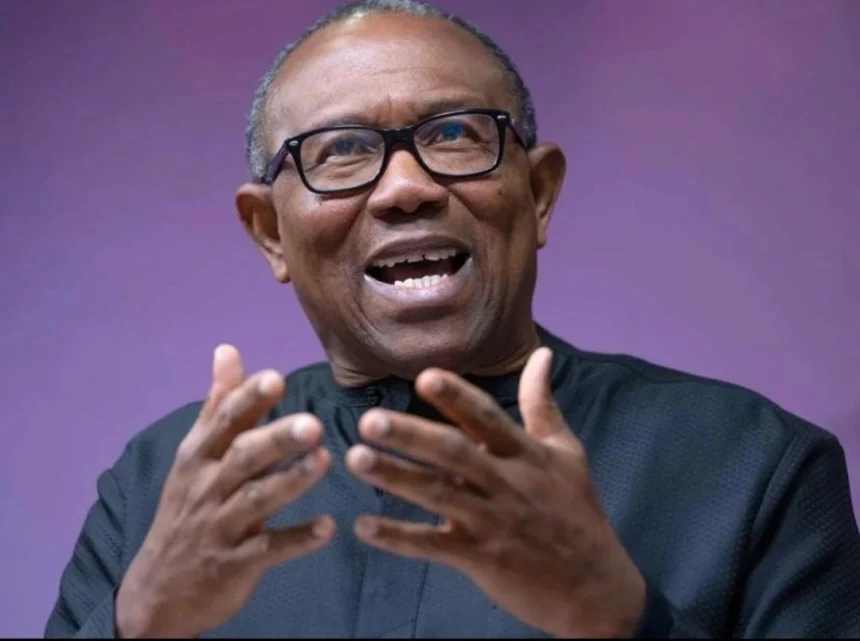
Peter Obi, the presidential candidate of the Nigeria Democratic Congress (NDC), has dismissed claims that he urged Nigerians living abroad to stop sending money to their families in Nigeria, saying his comments were misrepresented by political opponents.
Obi explained that his concern was the increasing number of Nigerians who rely on financial assistance from relatives overseas to meet their basic needs. He argued that the country should create conditions that enable citizens to earn a living and provide for their families without depending on remittances for survival.
The former Anambra State governor made the clarification in a post on his X account on Tuesday, following public reactions to his remarks at a town hall meeting with Nigerians in Manchester, United Kingdom.
Follow PenTalk News
Get breaking news, important updates and the latest stories directly on your phone.
He noted that his media office had previously addressed the controversy but decided to speak out again over what he described as attempts by political opponents to distort his message.
Obi acknowledged the significant contributions of Nigerians in the diaspora, particularly their financial support for relatives at home. According to him, money sent from abroad helps families pay school fees, settle medical bills, cover rent and meet feeding expenses.
He expressed appreciation for the sacrifices made by Nigerians overseas, stressing that their contributions and commitment to their loved ones deserved recognition and respect.
Obi maintained that he never intended to discourage diaspora Nigerians from assisting their families. Rather, he said his concern was that millions of citizens should not have to depend on relatives abroad to afford basic necessities.
He stated that Nigeria needed to build an economy capable of providing employment, accessible healthcare, quality education and broader economic opportunities for its citizens.
According to the NDC candidate, the country must prioritise policies that enable people to support themselves and their dependants without relying on financial assistance from family members living overseas.
Obi also accused political opponents of taking his comments out of context, insisting that his position was directed at the country’s economic challenges rather than the responsibilities of Nigerians abroad toward their families.
He said his objective was to see a Nigeria that takes responsibility for the welfare of its citizens instead of leaving millions to depend on relatives outside the country.
The politician concluded his message by extending his goodwill to Nigerians both at home and in the diaspora.
The clarification came days after his appearance at a town hall meeting with Nigerians in Manchester, where he urged members of the diaspora to reconsider how they respond to repeated financial requests from relatives in Nigeria.
During the meeting, Obi reportedly told attendees: “You have people at home in Nigeria today who are begging you for money. Tell them no!”
The remark generated mixed reactions, with some interpreting it as an appeal for Nigerians abroad to stop providing financial assistance to their relatives.
However, in his subsequent statement, Obi sought to clarify that his argument was against the growing dependence on diaspora remittances for basic survival, not a call for people overseas to abandon their families.
He reiterated that Nigeria should work towards an economy where citizens have access to the resources and opportunities needed to live with dignity and meet their responsibilities.