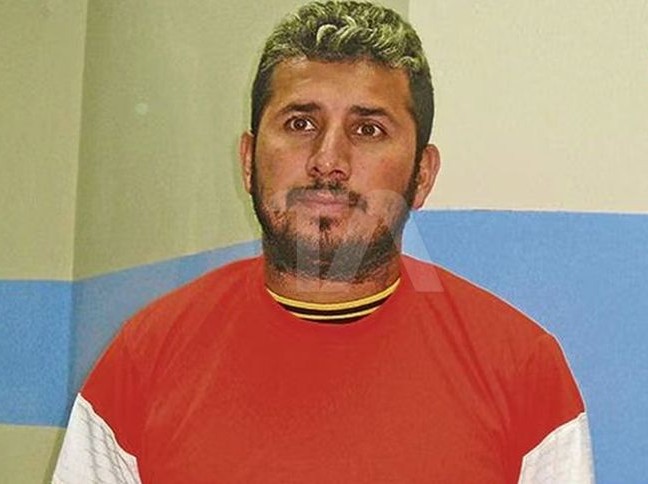
José Adolfo Macías Villamar, better known by his alias “Fito,” became one of the most prominent figures in Ecuador’s organised crime world before eventually ending up in the custody of the United States.
The 45-year-old was the leader of Los Choneros, a powerful Ecuadorian criminal organisation that grew from a local gang into a major player in the international cocaine trade.
His journey from the streets of Ecuador to a federal courtroom in New York involved prison escapes, gang wars, political violence, an international manhunt and a major shift in Ecuador’s approach to organised crime.
Follow PenTalk News
Get breaking news, important updates and the latest stories directly on your phone.
The rise of Los Choneros
Los Choneros emerged in Ecuador’s coastal province of Manabí during the 1990s. Over time, the group expanded its influence beyond the province and became deeply involved in drug trafficking and other criminal activities.
The organisation also developed a significant presence inside Ecuador’s prison system. From behind bars, its leaders were able to maintain networks outside prison while building alliances with other criminal groups.
Los Choneros became involved in the movement of cocaine through Ecuador, a country strategically located between Colombia and Peru, two of the world’s major cocaine-producing countries.
US authorities later alleged that Los Choneros worked with Mexico’s Sinaloa Cartel and controlled important trafficking routes through Ecuador. According to a US indictment, cocaine was moved from South America through Central America and Mexico before reaching the United States.
The group also became involved in the illegal movement of firearms. US prosecutors allege that members and associates arranged for weapons and ammunition purchased in the United States to be smuggled into Ecuador.
How Fito became the leader
Fito rose through the ranks of Los Choneros during the group’s expansion.
He was sentenced in Ecuador in 2011 to 34 years in prison for offences including murder, robbery, weapons possession and drug trafficking.
But imprisonment did not end his influence.
According to US authorities, Fito continued directing Los Choneros from prison using mobile phones and internet access. He eventually became the group’s principal leader following the killing of Jorge Luis Zambrano, known as “Rasquiña,” in 2020.
Under Fito’s leadership, Los Choneros remained a major force in Ecuador’s criminal landscape, although the organisation also faced growing competition from rival gangs.
US prosecutors allege that the group used violence, corruption and armed enforcers to protect its interests and maintain control over parts of the drug trade.
In February 2024, the US Treasury Department sanctioned Los Choneros and Fito, citing their alleged involvement in international drug trafficking.
The prison escape that plunged Ecuador into crisis
Fito had already escaped from prison once, in 2013, before being recaptured several months later.
His second escape proved far more consequential.
In January 2024, Ecuadorian authorities discovered that Fito had disappeared from his prison cell in Guayaquil. He was due to be transferred to a maximum-security facility shortly afterwards.
His disappearance triggered a major security crisis.
Prison riots broke out, gang members carried out attacks and kidnappings, and armed men stormed a television station during a live broadcast. Ecuadorian President Daniel Noboa subsequently declared an “internal armed conflict” against criminal organisations.
The government launched a nationwide search for Fito, but he remained at large for more than a year.
How Fito was finally captured
Fito’s long period on the run ended on June 25, 2025.
Ecuadorian security forces captured him in Montecristi, in his home province of Manabí. According to reporting by InSight Crime, authorities found him in a bunker.
By that point, the United States had already built a criminal case against him.
In April 2025, US prosecutors in Brooklyn unsealed a seven-count indictment accusing Fito of international cocaine trafficking, firearms offences and conspiracy-related charges.
Prosecutors alleged that, as leader of Los Choneros, he directed a network involved in trafficking cocaine to the United States and arranging the illegal movement of American firearms to Ecuador.
The charges were allegations, and Fito was presumed innocent unless proven guilty.
The road to US custody
Fito’s capture opened the way for his extradition.
Ecuador had historically restricted the extradition of its citizens, but a constitutional change approved in 2024 allowed Ecuador to extradite nationals in certain circumstances.
On July 20, 2025, Ecuador extradited Fito to the United States.
He was taken to New York, where he appeared in federal court in Brooklyn the following day.
The US indictment accuses him of international cocaine distribution, using firearms in furtherance of drug trafficking, smuggling firearms from the United States and conspiracy to purchase firearms through intermediaries.
US prosecutors said the case was built through cooperation between American agencies and Ecuadorian authorities.
If convicted on the charges contained in the superseding indictment, Fito faces a mandatory minimum sentence of 20 years and potentially life imprisonment.
What happened to Los Choneros?
Fito’s capture and extradition dealt a major blow to the organisation he had led, but it did not automatically eliminate Los Choneros.
The group had already begun fragmenting after the death of Rasquiña in 2020. Rival factions fought for control of territory, prisons and drug-trafficking routes.
After Fito’s escape in 2024, Ecuadorian authorities intensified military and police operations against criminal organisations.
Since his extradition, authorities have continued targeting figures connected to Los Choneros and other Ecuadorian gangs.
The organisation’s influence has also been challenged by rival groups, particularly Los Lobos, which has been involved in Ecuador’s wider gang conflict.
From Ecuador’s prisons to a US courtroom
Fito’s story illustrates how Ecuador’s prison system became intertwined with the country’s organised crime crisis.
Los Choneros evolved from a local gang into a powerful criminal organisation with connections to international drug-trafficking networks. Fito was able to maintain influence while incarcerated, escape from prison twice and remain at large for more than a year after his second escape.
But his eventual capture changed the course of his story.
After years of operating primarily from Ecuador, Fito was taken out of the country for the first time as a prisoner and placed in US custody, where prosecutors are pursuing allegations involving cocaine trafficking and firearms.
His extradition also marked a significant moment in Ecuador’s fight against transnational organised crime: the country’s government had changed its legal framework to permit the extradition of Ecuadorian nationals, allowing Fito to be transferred to the United States to face federal charges.
The criminal case against him remains separate from the broader question of what happens to Los Choneros. While Fito is now in US custody, Ecuador’s criminal landscape remains contested by rival organisations competing over territory, prisons and trafficking routes.
Compiled by Michael Costa from reports by the U.S. Department of Justice and InSight Crime