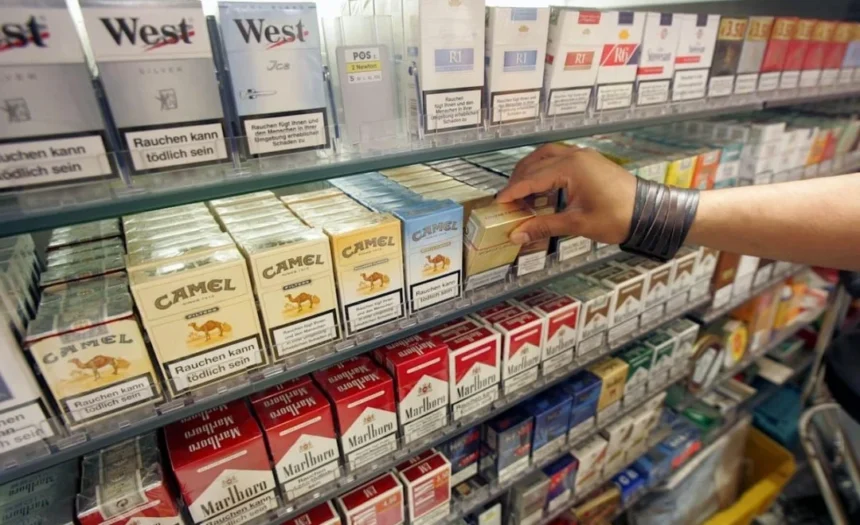
Germany’s parliament has approved a gradual increase in tobacco taxes that could push the average price of a pack of 20 cigarettes to €11.36 by 2030, as the government seeks to raise additional revenue and discourage smoking.
The Bundestag approved the amendment to Germany’s Tobacco Tax Act on Thursday, October 15, 2026, following a debate on the proposed changes. The legislation was backed by the governing Christian Democratic Union/Christian Social Union (CDU/CSU) and Social Democratic Party (SPD), while the Alternative for Germany (AfD), the Greens and Die Linke voted against it.
According to the German parliament, the revised tax plan is expected to generate approximately €11.7 billion in additional revenue between 2027 and 2030. <Cite refs={[“turn285091search2”]}/>
Follow PenTalk News
Get breaking news, important updates and the latest stories directly on your phone.
How Much Will Cigarettes Cost in Germany?
Under the government’s projections, the average retail price of a standard pack of 20 cigarettes will increase progressively over four years.
The projected prices are:
- 2027: €8.77 per pack
- 2028: €9.56 per pack
- 2029: €10.42 per pack
- 2030: €11.36 per pack
The figures represent estimated average retail prices rather than fixed prices for every cigarette brand. Manufacturers and importers retain control over their retail pricing, meaning the final cost may vary depending on the product. <Cite refs={[“turn285091search4”]}/>
The proposed changes will also affect hand-rolling tobacco, pipe tobacco, heated tobacco products, waterpipe tobacco and certain alternatives to conventional tobacco products.
The German government expects the revised tax system to generate around €1.5 billion in additional revenue in 2027. The annual additional revenue is projected to rise to approximately €4.5 billion by 2030.
Beyond increasing government income, officials say the reform is intended to protect public health by making tobacco consumption less attractive, particularly among young people.
Health advocates have long supported higher tobacco taxes as a way to discourage smoking and prevent people from developing nicotine dependence. However, the effectiveness of the policy will also depend on how smokers respond to the higher prices.
The proposed increases have raised concerns among tobacco industry representatives, who fear that higher prices could encourage some consumers to purchase cheaper cigarettes from other European Union countries or turn to illegal suppliers.
Industry representatives have warned that such a shift could hurt legitimate tobacco retailers and reduce the tax revenue the government expects to collect.
During parliamentary discussions, some lawmakers also raised concerns about the possible consequences for legal businesses and the risk of expanding the illicit tobacco market.
The debate reflects a broader challenge facing governments that use tobacco taxation to achieve both fiscal and public health objectives: higher prices may discourage consumption, but excessive increases could also encourage some consumers to seek cheaper alternatives.
The tax increase has exposed differences among Germany’s political parties over the appropriate level of tobacco taxation.
The governing CDU/CSU and SPD supported the measure, while the AfD and Die Linke opposed it. The Greens also voted against the legislation, despite supporting stronger tobacco taxation in principle, arguing that the planned increases did not go far enough.
The revised legislation followed discussions in the Bundestag’s Finance Committee, where lawmakers considered the expected revenue, public health benefits and concerns raised by industry representatives.
Smoking remains a significant public health concern in Germany. According to the figures cited in the report, approximately 19 per cent of people aged 15 and above smoke, either regularly or occasionally.
The German Cancer Research Centre has also highlighted the heavy toll of tobacco-related illnesses, with around 131,000 deaths attributed to smoking-related diseases in 2023.
Supporters of higher tobacco taxes argue that making cigarettes more expensive can encourage smokers to quit and discourage young people from taking up the habit.
The planned increases will therefore test whether Germany can generate additional tax revenue while reducing tobacco consumption and limiting the growth of illegal tobacco sales.
Source: German Bundestag and German Federal Ministry of Finance.