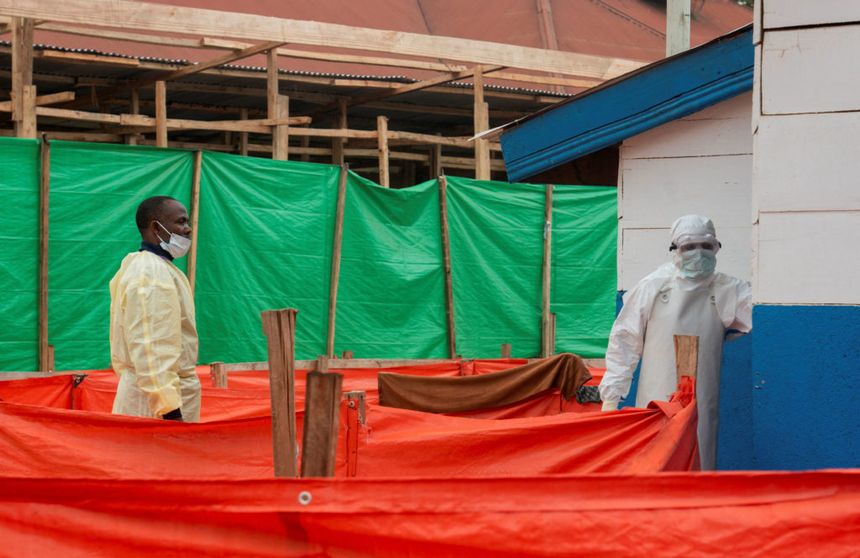
Confirmed Ebola infections in Congo have surpassed 8,000, intensifying pressure on the country’s strained healthcare system as authorities face a growing shortage of health workers needed to contain the outbreak.
Congo declared the outbreak on May 15 after identifying the rare Bundibugyo strain of the Ebola virus. The strain has no established vaccine or specific treatment, making containment efforts particularly challenging.
Figures released by the country’s Health Ministry showed that 8,067 cases had been confirmed as of September 26, while 3,901 people had died. The outbreak has spread across 63 health zones in seven of Congo’s 26 provinces, putting the case fatality rate at more than 48 per cent.
Follow PenTalk News
Get breaking news, important updates and the latest stories directly on your phone.
The World Health Organisation (WHO), in its latest update, warned that the persistently high death rate remains a major concern, particularly the number of patients dying in their communities before receiving adequate medical care.
“The continuously high crude case fatality ratio, and especially the continuously high rate of deaths occurring in communities, highlights the seriousness of the disease,” the WHO said, pointing to continuing difficulties with early detection and access to timely treatment.
The WHO also warned last week that Congo was facing a shortage of health workers needed to respond effectively to the outbreak.
The situation has been further complicated by complaints from medical workers over delayed or unpaid salaries, with some workers embarking on strikes despite the ongoing health emergency.
The Africa Centres for Disease Control and Prevention (Africa CDC) said 50 health workers have died since the outbreak began.
While some areas, including Ituri and Haut-Uele provinces, have recorded declines in confirmed cases, health authorities have reported continued transmission elsewhere, with the outbreak expanding into additional areas.
Africa CDC data indicate that the current outbreak has spread more extensively within the same period than the major West African Ebola outbreak that lasted from 2014 to 2016.
By the 19th week of that regional outbreak, 3,781 cases had been recorded, compared with 7,840 cases during the corresponding period of the current outbreak.
The WHO has warned that the Congo outbreak is on course to exceed the scale of the West African epidemic, which claimed about 11,000 lives.
Efforts to contain the disease have been further affected by insecurity, population displacement, industrial action by health workers and significant population movements, all of which have made surveillance and access to healthcare more difficult.